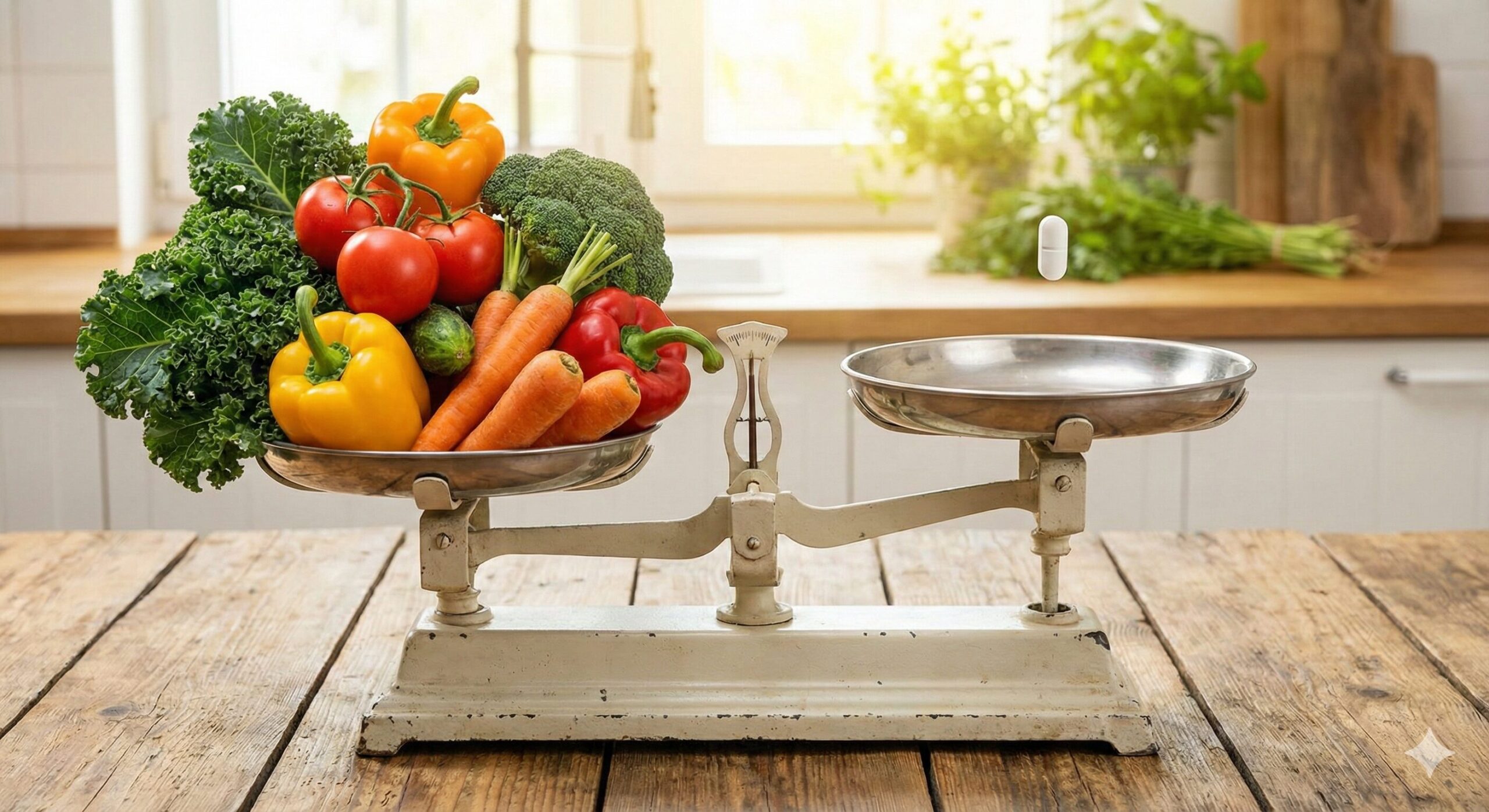
자연이 설계한 완벽한 매트릭스: 왜 ‘음식’이 먼저인가?
브리짓준(Bridget June)은 “음식으로 고치지 못하는 병은 약으로도 고칠 수 없다”는 히포크라테스의 명언을 현대적으로 재해석합니다. 우리의 철학은 명확합니다. 영양소 섭취의 디폴트(Default)는 언제나 ‘자연 식재료’여야 합니다.
실험실에서 합성된 비타민 C 알약 하나는, 사과 한 알에 들어있는 비타민 C와 본질적으로 다릅니다. 자연의 식재료에는 비타민뿐만 아니라 수천 가지의 파이토케미컬, 효소, 식이섬유가 ‘복합체(Matrix)’를 이루고 있어, 체내 흡수율(Bioavailability)을 극대화하고 서로의 효능을 보완합니다.
현실적 타협안: 영양제가 필요한 순간
하지만 우리는 완벽하지 않습니다. 야근으로 인한 스트레스, 피할 수 없는 술자리, 그리고 미네랄이 고갈된 토양에서 자란 채소들은 현대인에게 ‘영양 결핍’을 초래합니다. 이때 영양제는 **’정밀한 계산에 의한 보완재’**로서 훌륭한 역할을 합니다. 내가 오늘 식사로 채우지 못한 2%를 채워주는, 든든한 건강 보험과도 같습니다.
주의: 영양제도 간(Liver)에게는 ‘일감’이다
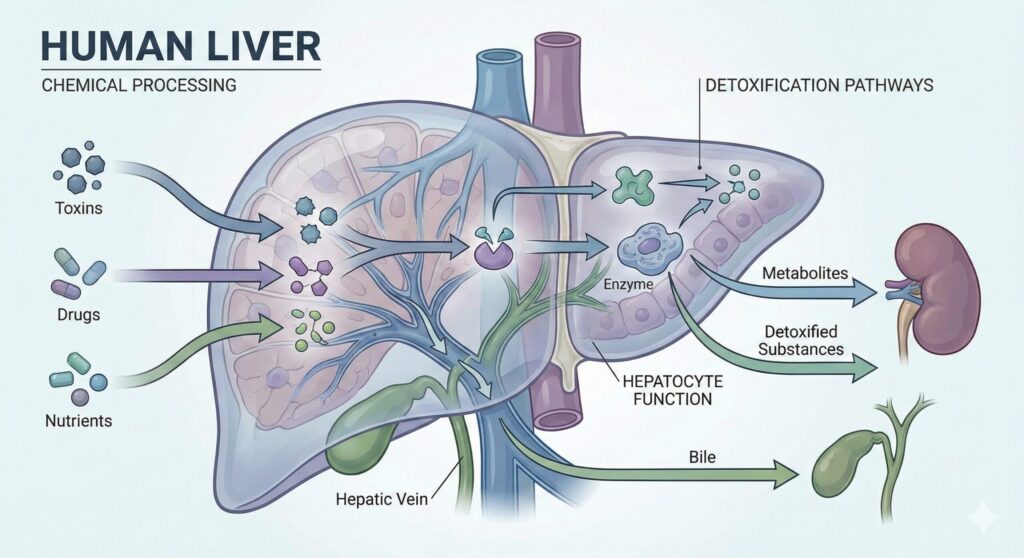
이 칼럼의 핵심은 바로 여기에 있습니다. 많은 분들이 간과하는 사실은 **”고농축 영양제도 간에게는 해독하고 대사해야 할 화학물질”**이라는 점입니다.
- 간 독성(Hepatotoxicity)의 위험: 영양제, 특히 합성 비타민이나 허브 추출물을 무분별하게 과다 섭취할 경우, 간 수치(ALT/AST)가 상승할 수 있습니다. 간은 알코올뿐만 아니라 당신이 삼킨 그 많은 알약들을 분해하느라 24시간 과부하에 걸릴 수 있습니다.
- 길항 작용(Antagonism): 특정 미네랄을 과하게 섭취하면 다른 미네랄의 흡수를 방해합니다. 예를 들어, 칼슘의 과잉은 마그네슘 흡수를 저해하고, 아연의 과잉은 구리 결핍을 유발합니다. 균형이 깨진 섭취는 오히려 독이 됩니다.
- 신장의 부담: 수용성 비타민이라도 메가도스(Megadose)를 장기간 지속하면 신장에 결석을 만들거나 여과 기능에 무리를 줄 수 있습니다.
Bridget June의 제안: 스마트한 섭취 가이드
영양제 섭취 전, 반드시 ‘계산’이 선행되어야 합니다.
- 1단계: 케일, 아몬드, 토마토 등 ‘리얼 푸드’로 식단을 채웁니다.
- 2단계: 나의 라이프스타일에서 부족한 영양소만 선별하여 ‘최소한’으로 섭취합니다.
- 3단계: 간에 휴식을 주기 위해 주기적으로 영양제 섭취를 중단하는 ‘휴지기’를 가집니다.
기억하세요. 건강은 알약의 개수가 아니라, 내 몸이 스스로 회복할 수 있는 환경을 만들어주는 것에서 시작됩니다.
관련 인사이트 (함께 읽으면 좋은 글)
Whole Foods vs. Supplements: A Strategic Guide to Calculated Nutrition and Liver Safety
The Hierarchy of Nutrition: Food First, Supplements Second
In the philosophy of Bridget June, the axiom “Body Rules the Mind” begins with what we put on our plates. There is a fundamental consensus among nutritionists and biohackers: Whole foods are the ultimate source of nutrition.
Why? Because nature packages nutrients in a complex matrix. When you eat an almond or kale, you aren’t just ingesting Vitamin E or K; you are consuming enzymes, fiber, and thousands of phytonutrients that work synergistically to maximize bioavailability. No laboratory can perfectly replicate this natural orchestration.
The Reality Check: Why We Need a Safety Net
However, we must be realists. Modern agricultural soils are depleted of minerals compared to 50 years ago. Furthermore, urban lifestyles—characterized by stress, occasional alcohol consumption, and processed foods—deplete our nutrient reserves rapidly.
In this context, supplements serve as a crucial “Nutritional Insurance.” They are not a meal replacement but a calculated intervention to fill the specific gaps that daily diet cannot cover. For instance, obtaining sufficient Vitamin D solely from sunlight or food is nearly impossible for modern office workers. Here, supplementation is not a luxury; it is a biological necessity.
The Danger Zone: The Hepatic Load (Liver Toxicity)
While supplements are beneficial, we must never forget: To your liver, a supplement is a chemical substance.
Just like pharmaceutical drugs, most concentrated nutrients must be metabolized by the liver. This is where the danger of “Over-supplementation” lies.
- Hepatotoxicity (Liver Stress): Excessive intake of fat-soluble vitamins (A, D, E, K) or heavy metal-contaminated low-quality supplements accumulates in the liver, causing toxicity rather than health.
- Competition for Absorption: Taking too many isolated minerals simultaneously can lead to absorption competition (e.g., Zinc hindering Copper absorption), disrupting the body’s homeostatic balance.
- The Detox Cost: If you take a handful of pills daily without a clear deficiency, you are forcing your liver to work overtime to process and excrete the excess. This depletes the very energy you are trying to gain.
Conclusion: The Calculated Approach
The smartest biohacker calculates their deficit. They eat nutrient-dense meals (like Kale and Almonds) as the default and use supplements strictly to bridge the gap. Before reaching for a pill, ask yourself: “Can I get this from food first?” If the answer is no, then—and only then—supplement wisely, prioritizing high-quality, bioavailable forms to minimize stress on your body.
Related Insights (Internal Links)
The content provided on this website, including all text, graphics, images, and other materials, is for informational and educational purposes only. The biohacking protocols, recipes, and lifestyle insights shared by Bridget June are based on personal experience and independent research. This information is not intended to be a substitute for professional medical advice, diagnosis, or treatment. Always seek the advice of your physician or other qualified healthcare provider with any questions you may have regarding a medical condition or before implementing any new diet, supplement, or health regimen.
의료적 주의사항
본 웹사이트에서 제공되는 모든 텍스트, 그래픽, 이미지 및 기타 자료를 포함한 콘텐츠는 오직 정보 제공 및 교육적 목적으로만 작성되었습니다. 브리짓준(Bridget June)이 공유하는 바이오해킹 프로토콜, 레시피 및 라이프스타일 인사이트는 개인적인 경험과 독립적인 연구 데이터를 바탕으로 합니다. 이 정보는 전문적인 의학적 조언, 진단 또는 치료를 대신할 수 없습니다. 새로운 식단이나 건강 요법을 시작하기 전에는 항상 주치의와 상담하시기 바랍니다.