
한국인의 본능적 바이오해킹
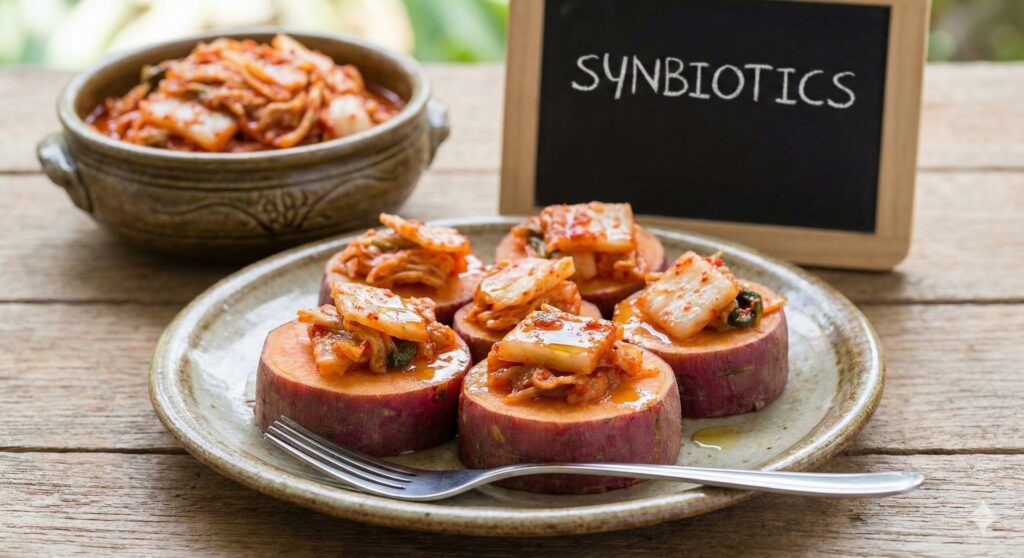
겨울철, 잘 익은 고구마 위에 시원한 김치 한 조각을 올려 먹는 것. 이것은 단순한 ‘단짠’의 조화가 아니라 한국인이 본능적으로 찾아낸 완벽한 영양학적 설계입니다.
고구마는 훌륭한 탄수화물이지만, 혈당을 빠르게 올릴 수 있다는 단점이 있습니다. 하지만 김치의 유기산과 식이섬유가 이 속도를 늦춰줍니다. 더 나아가 이 조합은 고구마의 섬유질(먹이)이 김치의 유산균(균)을 증식시키는 ‘신바이오틱스(Synbiotics)’ 효과를 냅니다. 장내 미생물을 위한 최고의 만찬을 준비하세요.
과학적 근거: 산(Acid)과 전분의 대화
이 맛있는 조합이 왜 살이 덜 찌고 장에 좋은지 분석해 드립니다.
- 신바이오틱스 효과 (Synbiotics): Frontiers in Microbiology에 따르면 신바이오틱스란 유산균(프로바이오틱스)과 그 먹이(프리바이오틱스)를 함께 섭취하여 장내 생존율을 극대화하는 전략입니다. 고구마의 수용성 식이섬유인 펙틴은 김치 속 락토바실러스 균의 훌륭한 먹이가 되어, 유산균이 장까지 살아서 도달하고 정착하도록 돕습니다.
- 유기산의 혈당 조절: 잘 익은 김치에는 젖산과 아세트산이 풍부합니다. European Journal of Clinical Nutrition의 연구는 탄수화물 식사에 발효 식품을 곁들이면 위 배출 속도가 느려져 식후 급격한 혈당 상승을 막아준다고 입증했습니다. 김치는 천연 혈당 조절제입니다.
- 저항성 전분 (쿨링의 마법): 고구마를 찐 후 식히면 전분의 분자 구조가 바뀝니다. Advances in Nutrition에 따르면, 식은 전분은 소장에서 소화되지 않고 대장으로 넘어가 유익균의 먹이가 되는 **’저항성 전분’**으로 변합니다. 이는 칼로리 흡수를 줄이고 장벽을 튼튼하게 하는 단쇄지방산(Butyrate)을 생성합니다.
재료 준비 (1인분)
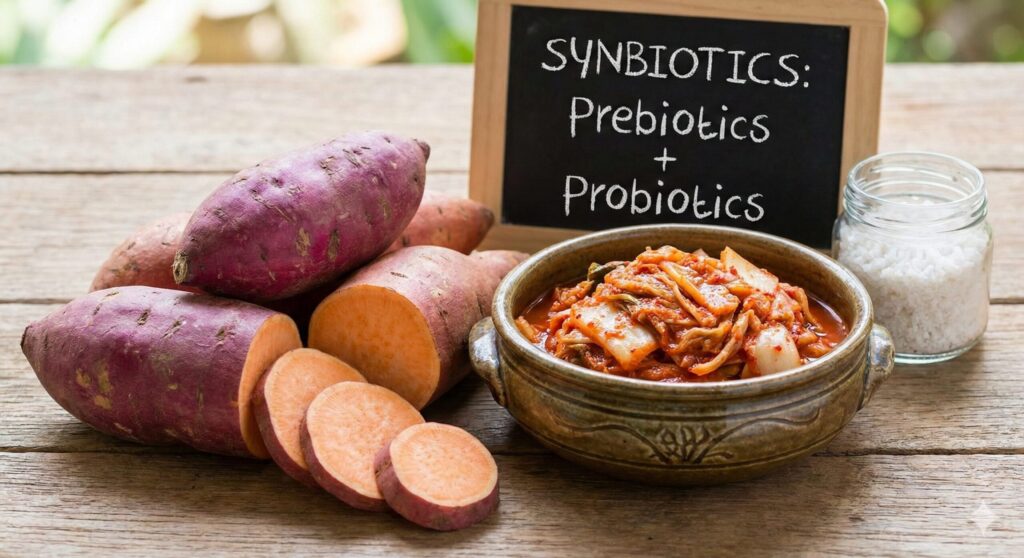
- 고구마: 중간 크기 2개 (약 300g). 항산화 성분이 많은 자색 고구마나 호박 고구마 추천.
- 잘 익은 김치 (묵은지): 100g. 발효가 충분히 진행되어 신맛이 나는 김치가 유산균이 가장 많습니다.
- 생들기름 (선택): 1작은술. 오메가-3 추가를 원한다면.
단계별 조리법 (Step-by-Step)
Step 1: 저온 스팀 (영양소 보존)
- 고구마를 껍질째 깨끗이 씻습니다. 껍질에는 안토시아닌과 같은 항산화 물질이 풍부합니다.
- 찜기에 넣고 젓가락이 들어갈 때까지 20~25분간 찝니다.
- Biohacking Insight: 군고구마(에어프라이어/오븐)는 당도를 높이지만 혈당 지수(GI)를 90까지 폭등시킵니다. 반면 찐 고구마는 GI가 50 정도로 낮습니다. 다이어트가 목적이라면 무조건 **’찐 고구마’**입니다.
Step 2: 레트로그라데이션 (식히기)
- 다 익은 고구마를 실온에서 식히거나, 냉장고에 2~3시간 넣어둡니다.
- Why? 이 과정에서 소화 흡수가 빠른 전분이 살이 찌지 않는 저항성 전분으로 변합니다.
Step 3: 김치 준비
- 잘 익은 김치를 꺼냅니다.
- 김치 양념을 씻어내지 마세요. 고춧가루의 캡사이신 성분은 대사를 촉진하여 지방 연소를 돕습니다. 크기가 크다면 길게 찢어 준비합니다.
Step 4: 페어링 (Pairing)
- 식은 고구마를 한 입 크기로 자릅니다.
- 고구마 위에 김치를 넉넉히 올려 한 입에 먹습니다.
- 퍽퍽함이 느껴질 때 김치의 톡 쏘는 유산균 국물이 소화를 돕습니다.
총 칼로리 및 영양 분석
- 총 칼로리: 약 280 kcal
- 탄수화물: 60g (상당량이 식이섬유와 저항성 전분)
- 단백질: 4g
- 지방: 1g (들기름 추가 시 증가)
- 장 건강: 유산균 & 식이섬유 폭탄
Related Biohacking Insights
이 레시피와 연결되는 브리짓준의 추천 포스팅입니다. (영문/국문 링크 포함)
- Pink Salt Water: Hydration / 핑크솔트 워터: 수분 보충
- Insight: Sweet potatoes absorb water in the gut. Drink salt water beforehand to prevent constipation. (고구마의 식이섬유가 물을 흡수하므로, 미리 소금물을 마셔두면 변비를 예방하고 배변 활동을 극대화할 수 있습니다.)
- Steamed Broccoli with Garlic Oil: Fiber Synergy / 브로콜리 마늘 오일 찜: 섬유질 시너지
- Insight: Need a full meal? Add this broccoli dish. The garlic oil enhances the absorption of beta-carotene from the sweet potato. (식사로 드신다면 브로콜리 찜을 곁들이세요. 마늘 오일이 고구마의 베타카로틴 흡수를 돕습니다.)
- Apple Carrot Rapés: Gut Reset / 사과 당근 라페: 장 리셋
- Insight: Kimchi is spicy? Cool your palate with this sweet and sour apple carrot salad. (김치가 너무 맵다면 상큼한 사과 당근 라페로 입가심을 하세요. 장 건강 시너지가 2배가 됩니다.)
- Homemade Almond Milk: Creamy Pairing / 수제 아몬드 밀크: 부드러운 음료
- Insight: Milk and sweet potato is a classic, but almond milk avoids dairy inflammation. (우유 대신 아몬드 밀크를 곁들이면 유제품 염증 걱정 없이 부드러운 맛을 즐길 수 있습니다.)
- Beef Scallion Rolls: Protein Add-on / 소고기 대파 말이: 단백질 보충
- Insight: Since this snack is low in protein, have a few beef rolls if you are using this as a meal replacement. (고구마 김치만으로는 단백질이 부족합니다. 식사 대용이라면 소고기 말이 몇 개를 추가하세요.)
Sweet Potato & Kimchi: The Perfect Synbiotic Protocol for Gut Health
Introduction: The Ultimate Korean Biohack
Why do Koreans instinctively place a slice of fermented Kimchi on a hot sweet potato? It turns out, this culinary tradition is a nutritional masterpiece.
Sweet potatoes are excellent carbohydrates, but they can spike blood sugar. However, when paired with the organic acids and fiber in Kimchi, the glycemic response is blunted. Furthermore, this combination creates Synbiotics—a synergy where the prebiotic fiber of the potato feeds the probiotic bacteria in the kimchi. This is not just a winter snack; it is a strategic protocol to restore your gut microbiome.
Scientific Evidence: Acid, Starch, and Bacteria
This pairing utilizes three powerful biochemical mechanisms to optimize metabolism.
- The Synbiotic Effect: A study in Frontiers in Microbiology defines synbiotics as a mixture comprising live microorganisms and substrate(s) selectively utilized by host microorganisms. Sweet potatoes are rich in soluble fiber (pectin), which acts as fuel for the Lactobacillus strains found in Kimchi, significantly increasing their survival and colonization rates in the gut.
- Organic Acids & Glycemic Control: Kimchi is rich in lactic and acetic acid. According to the European Journal of Clinical Nutrition, adding fermented foods to a carbohydrate-rich meal lowers the overall Glycemic Index (GI). The acidity slows down gastric emptying, preventing rapid blood sugar spikes typically associated with starchy foods.
- Resistant Starch (The Cooling Hack): When sweet potatoes are cooked and then cooled, a portion of the starch retrogrades into Resistant Starch type 3. Research in Advances in Nutrition shows that resistant starch functions like fiber—it bypasses digestion in the small intestine and ferments in the colon, producing butyrate, a short-chain fatty acid that heals the gut lining.
Ingredients (Precision Metrics)
- Sweet Potatoes: 2 medium (approx. 300g). Purple or orange flesh varieties have higher antioxidant levels.
- Ripe Kimchi (Aged): 100g. Must be well-fermented (sour) to ensure maximum probiotic count and organic acid content.
- Perilla Oil (Optional): 1 tsp. Drizzle over the potato for extra Omega-3s.
- Water: For steaming.
Step-by-Step Instructions
Step 1: Low-Temp Steaming (Nutrient Preservation)
- Wash the sweet potatoes thoroughly. Do not peel them; the skin contains potent antioxidants like anthocyanins.
- Place them in a steamer. Steam for 20-25 minutes until a chopstick slides in easily.
- Biohacking Insight: Steaming is superior to baking/roasting. Baking raises the GI of sweet potatoes significantly (up to 90), while steaming keeps it moderate (around 50).
Step 2: The Retrogradation (Cooling)
- This is the most critical step. Once cooked, let the sweet potatoes cool down to room temperature, or ideally, refrigerate them for 2-3 hours.
- Why? This cooling process converts digestible starch into Resistant Starch. Even if you reheat them slightly later, the resistant starch structure remains.
Step 3: Kimchi Prep
- While the potatoes cool, take out the Ripe Kimchi.
- If the kimchi pieces are too large, slice them lengthwise. Do not wash off the spice paste; the capsaicin boosts metabolism.
Step 4: The Synbiotic Pairing
- Slice the cooled sweet potato into rounds.
- Place a generous piece of Kimchi on top of each slice.
- Optional: Drizzle a few drops of Raw Perilla Oil on top to lower the glycemic load further with healthy fats.
Total Calories & Macros (Per Serving)
- Total Calories: ~280 kcal
- Carbs: 60g (Significant portion is fiber and resistant starch)
- Protein: 4g
- Fat: 1g (Add perilla oil to increase fat)
- Gut Health: High Probiotics & Prebiotics