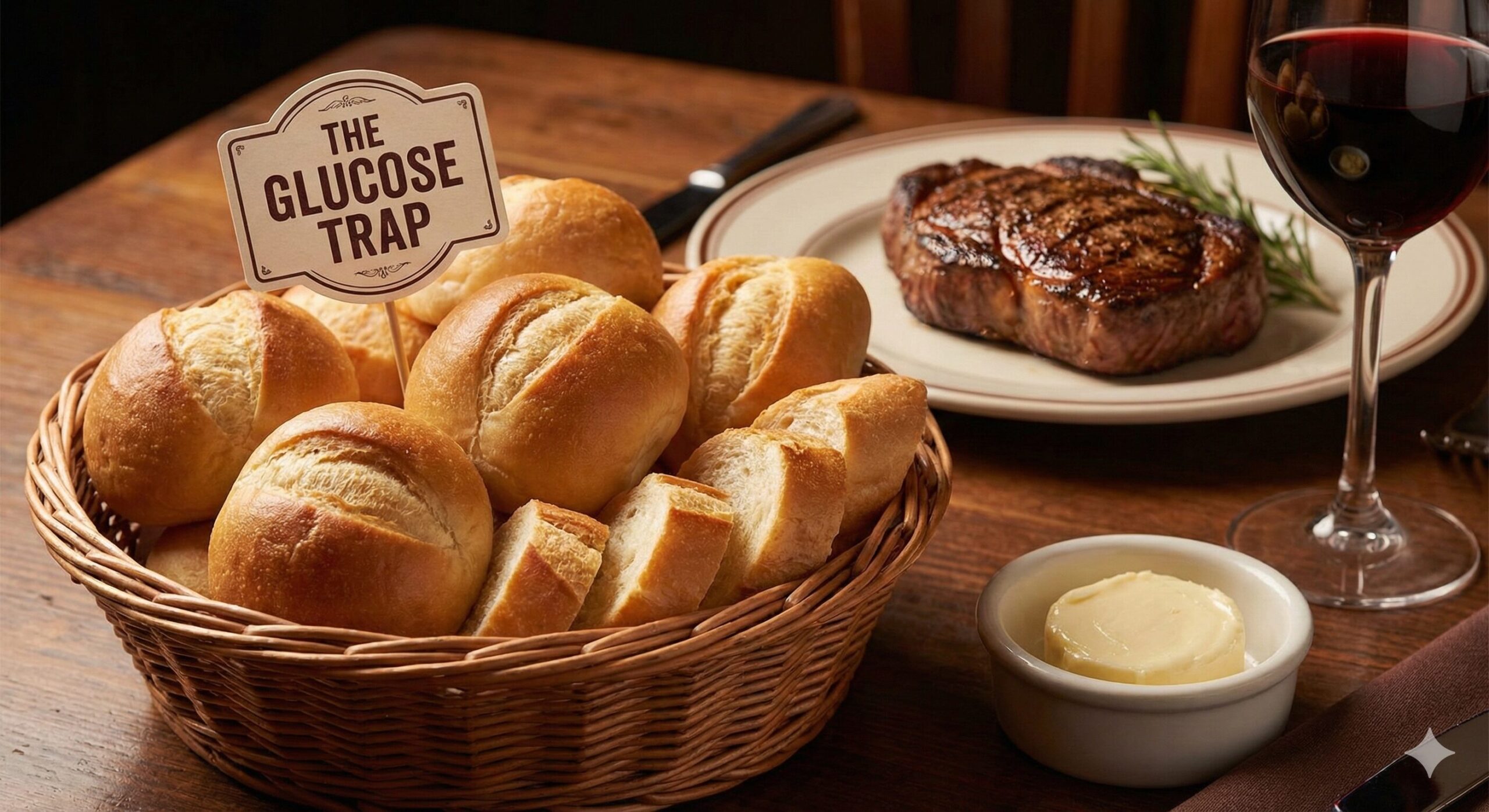
식전 빵은 친절이 아니라 ‘생물학적 상술’입니다
레스토랑에 앉자마자, 물보다 먼저 따뜻한 빵 바구니가 나오는 이유를 생각해 보신 적 있나요? 이것은 단순한 환대가 아닙니다. 당신의 지갑을 열게 만들기 위해 계산된, 매우 정교한 ‘생물학적 해킹’입니다.
생물학적 관점에서 볼 때, 정제된 탄수화물(특히 흰 밀가루)은 혈류에 즉각적인 영향을 미칩니다. 공복 상태에서 빵을 섭취하면 혈당 수치가 급격히 치솟습니다. *미국 임상 영양학 저널(American Journal of Clinical Nutrition)*의 연구에 따르면, 이러한 고혈당 식품은 막대한 양의 인슐린 분비를 유발합니다. 이 인슐린은 혈액 속의 당을 빠르게 청소해버리는데, 이 과정에서 혈당이 급격히 떨어지는 반동성 저혈당(Reactive Hypoglycemia) 현상이 발생합니다.
이때 뇌는 방금 음식을 먹었음에도 불구하고 “기아 상태”라고 착각하게 됩니다. 그 결과는 무엇일까요? 당신은 더 많은 에피타이저를 시키고, 메인 요리의 양을 늘리며, 통계적으로 디저트를 주문할 확률이 비약적으로 높아집니다. 레스토랑은 당신의 생화학적 반응을 이용해 매출을 올리고 있는 것입니다.
숨겨진 역사: 우리는 왜 ‘값싼 칼로리’에 중독되었는가?
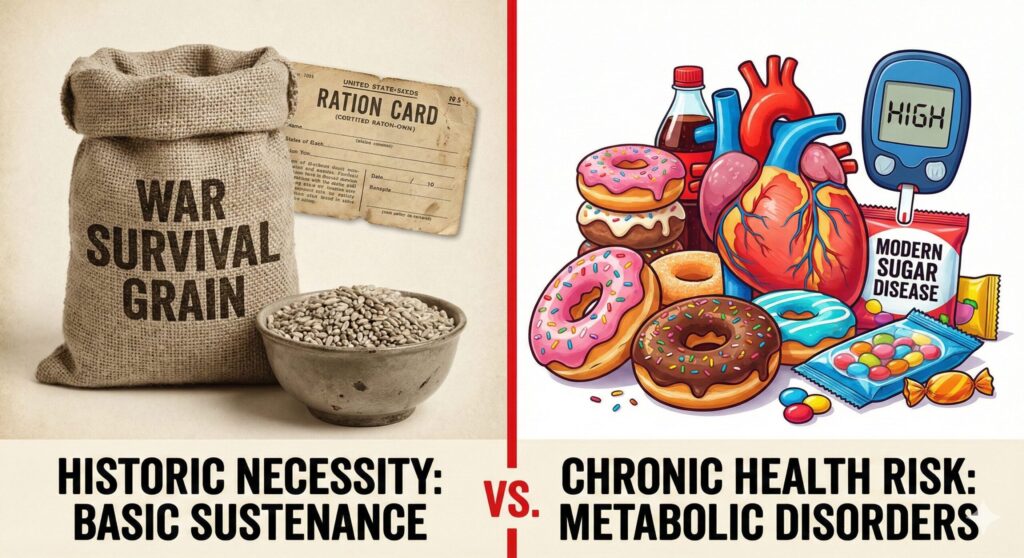
왜 우리의 식탁이 빵, 설탕, 옥수수로 점령당했을까요? 이것은 단순한 기호의 문제가 아닙니다. 인류가 겪은 전쟁과 기아(Starvation)의 역사가 그 배경에 있습니다.
20세기의 참혹한 전쟁들을 겪으며, 전 세계 정부의 최우선 과제는 대규모 아사(굶어 죽음)를 막는 것이었습니다. 당시 단백질과 양질의 지방은 대중에게 공급하기에 너무나 비싸고 생산이 어려운 자원이었습니다. 결국 인류는 생존을 위해 ‘값싼 에너지’를 선택했습니다. 정부와 농업 기업들은 생산 단가가 낮고, 보관이 쉬우며, 적은 양으로도 생명을 유지할 수 있는 밀, 옥수수, 설탕의 대량 생산을 장려하고 보조금을 지급했습니다.
농업 정책의 역사를 살펴보면, 우리는 생존을 위해 탄수화물 위주의 식사를 하도록 사회적으로 ‘설계’되었습니다. 하지만 문제는 지금입니다. 전쟁은 끝났고 우리는 풍요의 시대에 살고 있지만, 우리의 식단 시스템은 여전히 ‘전쟁 중’입니다. 과거 우리를 굶주림에서 구했던 그 값싼 탄수화물들이, 이제는 **만성 염증과 대사 질환(Metabolic Syndrome)**이라는 새로운 무기가 되어 우리 몸을 공격하고 있습니다.
베이커리의 환상: 눈은 즐겁지만 세포는 비명을 지릅니다
고급 베이커리 앞을 지날 때 우리는 시각적, 후각적 유혹에 압도당합니다. 마이야르 반응(Maillard reaction)으로 만들어진 황금빛 껍질과 달콤한 향기는 뇌의 도파민 경로를 자극합니다. 하지만 그 아름다운 케이크와 빵들은 사실상 미토콘드리아를 파괴하는 ‘설탕 폭탄’입니다.
대부분의 상업용 빵은 정제 설탕과 오메가-6가 과다한 식물성 기름의 조합입니다. 이들이 체내 단백질과 결합하면 **최종 당화 산물(AGEs)**을 형성합니다. *미국 국립생물정보센터(NCBI)*의 데이터에 따르면, AGEs는 산화 스트레스와 전신 염증의 주원인입니다. 쉽게 말해, 설탕이 우리 몸의 조직을 내부에서부터 “캐러멜화”시켜 노화를 가속화하고 혈관을 딱딱하게 만드는 것입니다.
브리짓 준의 솔루션: 역사를 알면 내 몸이 보인다
우리는 역사를 바꿀 수는 없지만, 내 몸의 반응은 바꿀 수 있습니다. 핵심은 빵을 아예 먹지 않는 것이 아니라, 빵이 내 몸을 지배하지 못하게 만드는 것입니다. 여기 제가 100일 챌린지를 통해 검증한 방어 전략을 공개합니다.
- 채소 먼저(Fiber First) 법칙: 절대 ‘맨 입’에 빵을 넣지 마세요. *코넬 대학교 의과대학(Weill Cornell Medicine)*의 연구에 따르면, 탄수화물 섭취 전에 채소(식이섬유)와 단백질을 먼저 먹는 것만으로도 식후 혈당 스파이크를 최대 73%까지 억제할 수 있습니다.
- 함정을 인식하세요: 공짜 빵이 나올 때, 이것이 과거 ‘생존을 위한 값싼 연료’였음을 기억하세요. 당신에게 필요한 건 값싼 설탕이 아니라, 당신이 주문한 메인 요리의 양질의 단백질입니다.
- 식초의 활용: 빵을 먹기 전, 물에 희석한 애플 사이다 비니거(식초)를 한 스푼 드세요. 이는 인슐린 민감성을 개선하여 혈당 충격을 완화합니다.
- 질적 전환: 꼭 빵을 먹어야 한다면, 천연 발효종을 사용한 사워도우를 선택하세요. 발효 과정에서 글루텐과 항영양소가 분해되어 염증 반응이 덜합니다.
결론: 식전 빵 바구니는 과거의 유물입니다. 우리는 더 이상 생존을 위해 값싼 설탕을 억지로 먹을 필요가 없습니다. 역사를 이해하고 지혜롭게 섭취할 때, 비로소 내 몸과 마음의 주인이 될 수 있습니다. Body Rules the Mind.
From Survival to Sickness: The Dark History of Carbs and the Restaurant Sugar Trap
The “Free” Bread Basket: A Biological Sales Tactic
Have you ever wondered why restaurants serve a warm basket of bread the moment you sit down, often before you’ve even ordered water? It is not merely a gesture of hospitality; it is a calculated biological hack designed to manipulate your spending behavior.
From a neurobiological perspective, refined carbohydrates—specifically white flour—act rapidly on the bloodstream. When you consume bread on an empty stomach, your blood glucose levels spike dramatically. According to research published in the American Journal of Clinical Nutrition, high-glycemic foods trigger a massive release of insulin. This insulin surge essentially “sweeps” the sugar out of your blood, leading to a crash known as Reactive Hypoglycemia. This crash signals your brain that you are starving, prompting you to order more appetizers and main courses. The restaurant is leveraging your biochemistry against your wallet.
The Hidden History: Why We Are Addicted to “Cheap Energy”
To truly understand why our food environment is dominated by bread, sugar, and corn, we must look back at history. The dominance of carbohydrates is not an accident or a simple preference; it is a legacy of war and survival.
Throughout the 20th century, particularly after the devastation of World Wars, nations faced a critical challenge: How to prevent mass starvation? High-quality proteins (meat) and healthy fats were expensive to produce and difficult to distribute in mass quantities. The solution was “Cheap Energy.” Governments and agricultural industries heavily subsidized the production of wheat, corn, and sugar. These crops were caloric powerhouses—cheap to grow, easy to store, and efficient at keeping populations alive during times of scarcity.
As noted in historical analyses of global agricultural policies, we were socially engineered to consume these cheap carbohydrates to survive. However, the war is over, but our diet hasn’t changed. We are still eating for “survival” in an era of abundance, leading to a metabolic disaster. What once saved humanity from starvation is now killing us with chronic inflammation and metabolic syndrome.
The Bakery Illusion: Visual Beauty, Cellular Chaos
Walking past a high-end bakery is a sensory overload. The golden-brown crusts (a result of the Maillard reaction) and the sweet aroma trigger dopamine pathways in the brain similar to those activated by addictive substances. However, what looks like a masterpiece of baking is often a “Sugar Bomb” for your mitochondria.
Most commercial pastries are a combination of refined sugar, flour, and trans fats or omega-6 rich vegetable oils. When these combine with proteins in your body, they form Advanced Glycation End-products (AGEs). As noted in studies by the National Center for Biotechnology Information (NCBI), AGEs are a primary driver of oxidative stress and systemic inflammation. They literally “caramelize” your internal tissue, accelerating aging, stiffening blood vessels, and degrading collagen.
Bridget’s Biohacking Strategy: Defense Without Deprivation
We cannot rewrite history, but we can rewrite our biological response. The goal is not to never eat bread again, but to stop letting it control your biology. Here is the Bridget June Protocol for navigating this carb-heavy world:
- The “Fiber First” Rule: Never eat refined carbs on a naked stomach. As validated by research from Weill Cornell Medicine, eating vegetables and protein before carbohydrates can reduce post-meal glucose spikes by up to 73%.
- Recognize the Trap: When the free bread arrives, realize it is “cheap energy” designed to spike your insulin. Prioritize the high-quality protein you ordered.
- Use Vinegar: Taking a tablespoon of apple cider vinegar in water before a carb-heavy meal can improve insulin sensitivity and blunt the sugar spike.
- Choose Quality: If you must eat bread, opt for genuine sourdough. The fermentation process breaks down some of the gluten and antinutrients, making it less inflammatory.
Conclusion: The bread basket is a relic of a survival mindset we no longer need. By understanding the history and biochemistry behind the menu, you reclaim control over your body and your mind. Body Rules the Mind.
The content provided on this website, including all text, graphics, images, and other materials, is for informational and educational purposes only. The biohacking protocols, recipes, and lifestyle insights shared by Bridget June are based on personal experience and independent research. This information is not intended to be a substitute for professional medical advice, diagnosis, or treatment. Always seek the advice of your physician or other qualified healthcare provider with any questions you may have regarding a medical condition or before implementing any new diet, supplement, or health regimen.
의료적 주의사항
본 웹사이트에서 제공되는 모든 텍스트, 그래픽, 이미지 및 기타 자료를 포함한 콘텐츠는 오직 정보 제공 및 교육적 목적으로만 작성되었습니다. 브리짓준(Bridget June)이 공유하는 바이오해킹 프로토콜, 레시피 및 라이프스타일 인사이트는 개인적인 경험과 독립적인 연구 데이터를 바탕으로 합니다. 이 정보는 전문적인 의학적 조언, 진단 또는 치료를 대신할 수 없습니다. 새로운 식단이나 건강 요법을 시작하기 전에는 항상 주치의와 상담하시기 바랍니다.