
For many of us, that first cup of coffee in the morning is a non-negotiable ritual. But what if your favorite pick-me-up is silently fueling chronic inflammation? While we often obsess over caffeine content or roast profiles, we overlook a critical factor: the purity and storage quality of the beans. If you struggle with persistent rhinitis, gastric issues, or that dreaded mid-afternoon “brain fog,” it’s time to look deeper into your coffee mug.
1. The “Sponge” Effect: Why Open Beans Are Dangerous
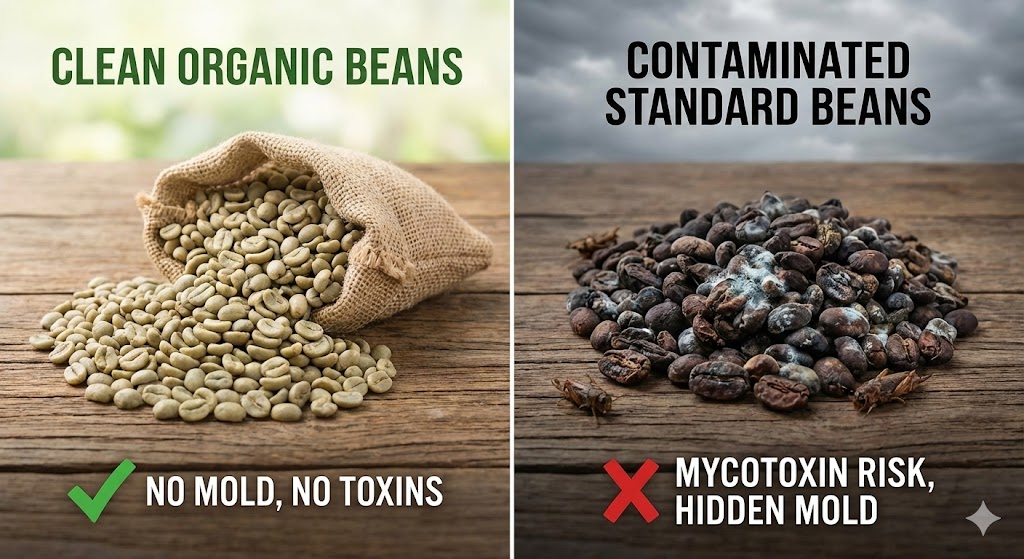
Coffee beans are far more than just seeds; they are biologically designed to be highly porous. This structural characteristic makes them a “natural sponge” that indiscriminately absorbs moisture, odors, and environmental pollutants.
- The Supply Chain Trap: Even if your local barista keeps the grinder lid tightly sealed, the damage often happens long before the beans reach the shop. During the months spent in humid warehouses and shipping containers, beans can absorb mold spores and fine dust from the air.
- A Trigger for Inflammation: For those with sensitive systems, these absorbed contaminants act as direct triggers. If you’ve noticed that your nose gets stuffy or your stomach feels acidic after a cup, it might not be the caffeine—it’s likely the microscopic pollutants your “sponge” beans have soaked up.
2. The Dark Truth: Mycotoxins & Chronic Inflammation
The most invisible threat in low-grade or poorly managed coffee is Mycotoxins. These are toxic compounds produced by certain molds that grow on agricultural crops. Unfortunately, they are heat-stable, meaning roasting doesn’t always eliminate them.
How Mycotoxins Affect Your Body:
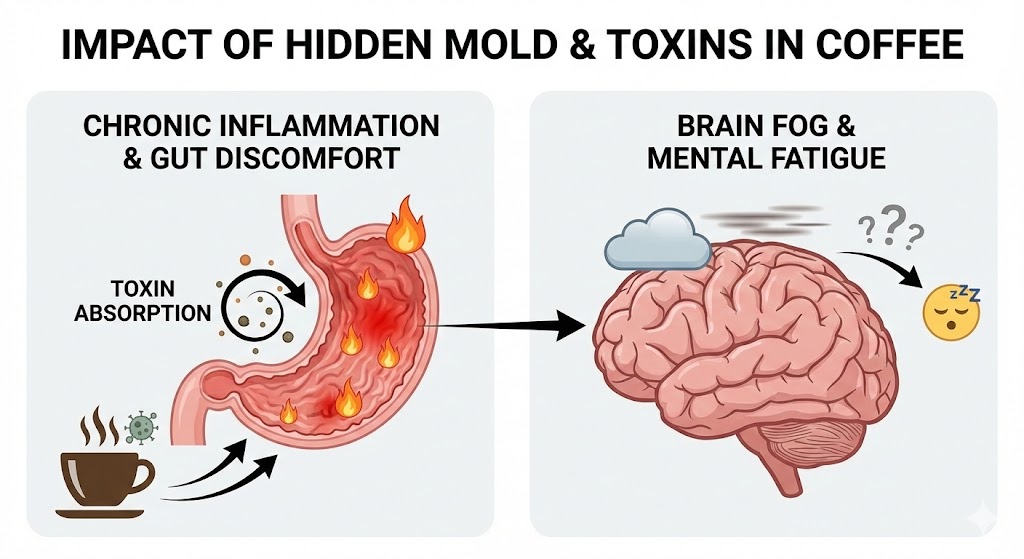
- Fueling Chronic Inflammation: When toxins enter your system, your immune system goes into overdrive. This constant state of alert worsens allergic reactions like rhinitis and keeps your body in a state of low-grade fatigue.
- Gastrointestinal Distress: The combination of rancid oils from old beans and mycotoxins can irritate the delicate lining of your stomach. This often exacerbates gastritis symptoms, leading to that “heavy” or painful feeling after drinking.
- The “Brain Fog” Phenomenon: Have you ever felt jittery yet mentally exhausted after coffee? This happens when the neurotoxicity of the mold outweighs the stimulant effect of the caffeine, leaving your mind clouded and unable to focus.
3. Sustainability & Ethics: Beyond My Health
Choosing “Clean Coffee” isn’t just about personal wellness; it’s an act of ethical consumption. Standard commercial coffee often relies on heavy pesticide use to maximize yield for mass production.
- Environmental Impact: These pesticides leach into the soil and water systems, harming local ecosystems and the health of the farmers.
- The Wellness Choice: By opting for toxin-tested, organic, or fair-trade beans, you are supporting a system that prioritizes the planet. Clean coffee is a true form of wellness because it respects the lifecycle of the product—from the health of the soil to the clarity of your mind.
4. 3 Steps to a Healthier Coffee Habit
How can you ensure your coffee is working for you instead of against you?
- Check the Processing: Look for “Washed” process beans. These are thoroughly cleaned before drying, significantly reducing the risk of mold growth compared to “Natural” or “Dry” processes.
- Freshness is Key: Oxidized oils are pro-inflammatory. Buy small batches of freshly roasted beans and consume them within 2-4 weeks.
- Seek Transparency: Choose brands that explicitly mention toxin testing or “Specialty Grade” certifications. Investing in higher-quality beans is a direct investment in lowering your body’s inflammation levels.
Conclusion: What’s Really in Your Cup?
Your daily coffee is more than a beverage; it’s a chemical complex that interacts with your cells every single day. Is your cup a “toxic sponge” aggravating your rhinitis and clouding your brain, or is it a source of clean, focused energy?
The switch to clean coffee is one of the simplest ways to reduce your toxic load and reclaim your vitality. Your body—and your brain—will thank you.