1. The Hidden Burden: Is It Fat or Just “Bu-gi”?
Have you ever woken up feeling like a “heavy sponge”? Your morning starts with swollen fingers that won’t let your rings slide off, and a face so puffy it hides your natural jawline. You might think you’ve gained weight overnight, but as a Brand Planner who analyzes the biology of wellness, I have to tell you: It’s not fat. It’s chronic inflammation.
In Korea, we have a specific word for this: “Bu-gi” (부기). It’s that stubborn water retention and cellular swelling caused by stress, high sodium intake, and environmental toxins. While many people turn to harsh chemical diets or caffeine-loaded “slimming teas,” I’ve discovered a much more elegant, $0-cost way to hack this system. After my signature [Morning Salt Water Detox], I spend my afternoon with a cup of Authentic Korean Lotus Root Tea.
2. Why “Lotus Root”? The Engineering of Nature’s Filter
Think about the Lotus flower. It is the ultimate symbol of purity in Eastern philosophy. Why? Because even though it grows in the thickest, darkest mud, its leaves and petals remain pristinely white and water-repellent. The secret lies in its roots.
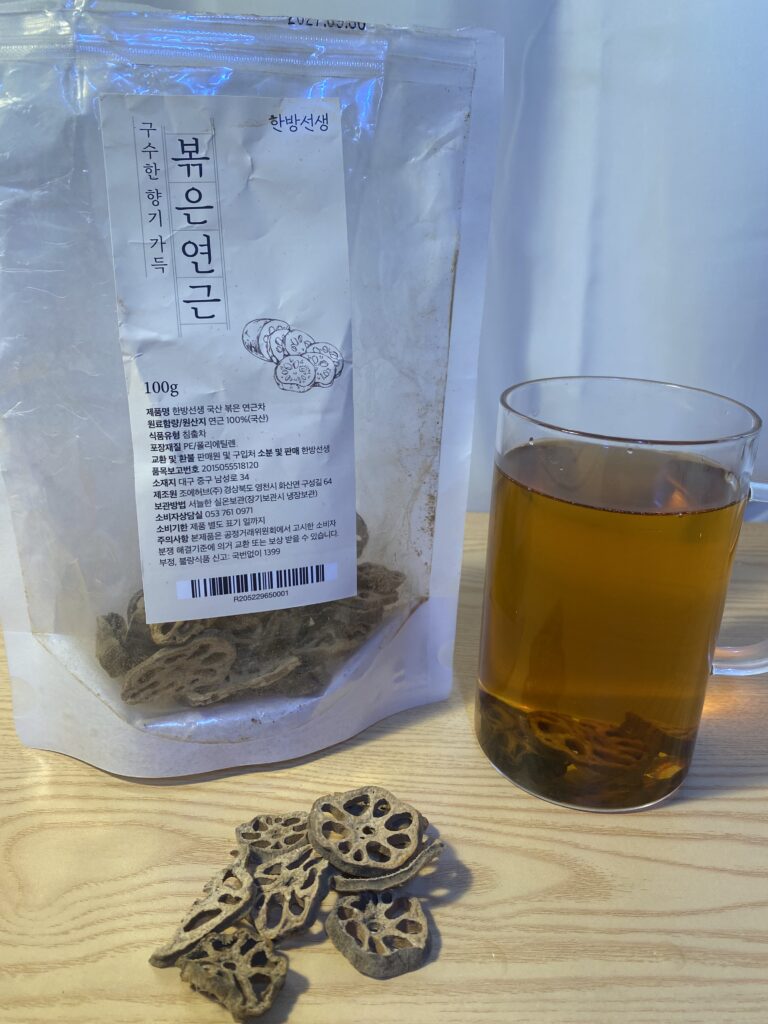
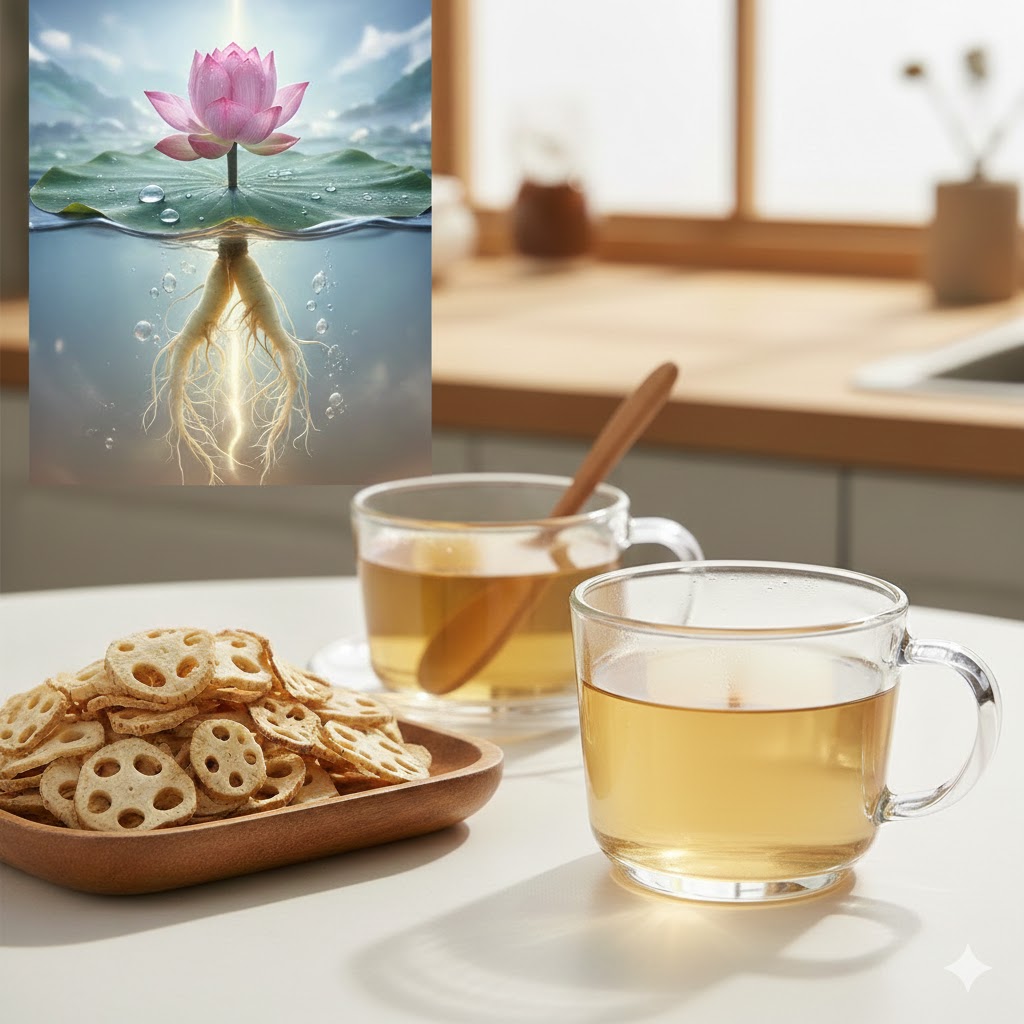
The lotus root is nature’s most sophisticated water purifier. When you slice it, you see beautiful, intricate air holes. These aren’t just for decoration; they are the plant’s respiratory and filtration system. When you consume high-quality lotus root tea, you are essentially borrowing that “filtration technology” for your own lymphatic system.
- Tannins & Polyphenols: These are the “cleaning agents” of the plant world. They help contract inflamed tissues and flush out waste from your blood vessels.
- The Flushing Mechanism: Unlike green tea or coffee, lotus root tea is a gentle, non-stimulant diuretic. It signals your kidneys to release trapped sodium without stressing your heart or causing jitters.
- K-Beauty Longevity: Korean actresses don’t just use expensive creams. They drink “Blood-Cooling” teas like lotus root to prevent the heat-induced inflammation that causes premature aging and skin dullness.
3. [Bridget’s Ritual] How to Brew: Seamless Integration
As a busy professional, I value efficiency. Here is how I integrate this “Anti-Inflammatory Filter” into my daily design:
① The Mindful Home Ritual
When you are at home and need a mental reset, use a clear glass cup.
- Place exactly 3 slices of roasted lotus root into the cup.
- Pour 8oz of hot water (approx. 90°C).
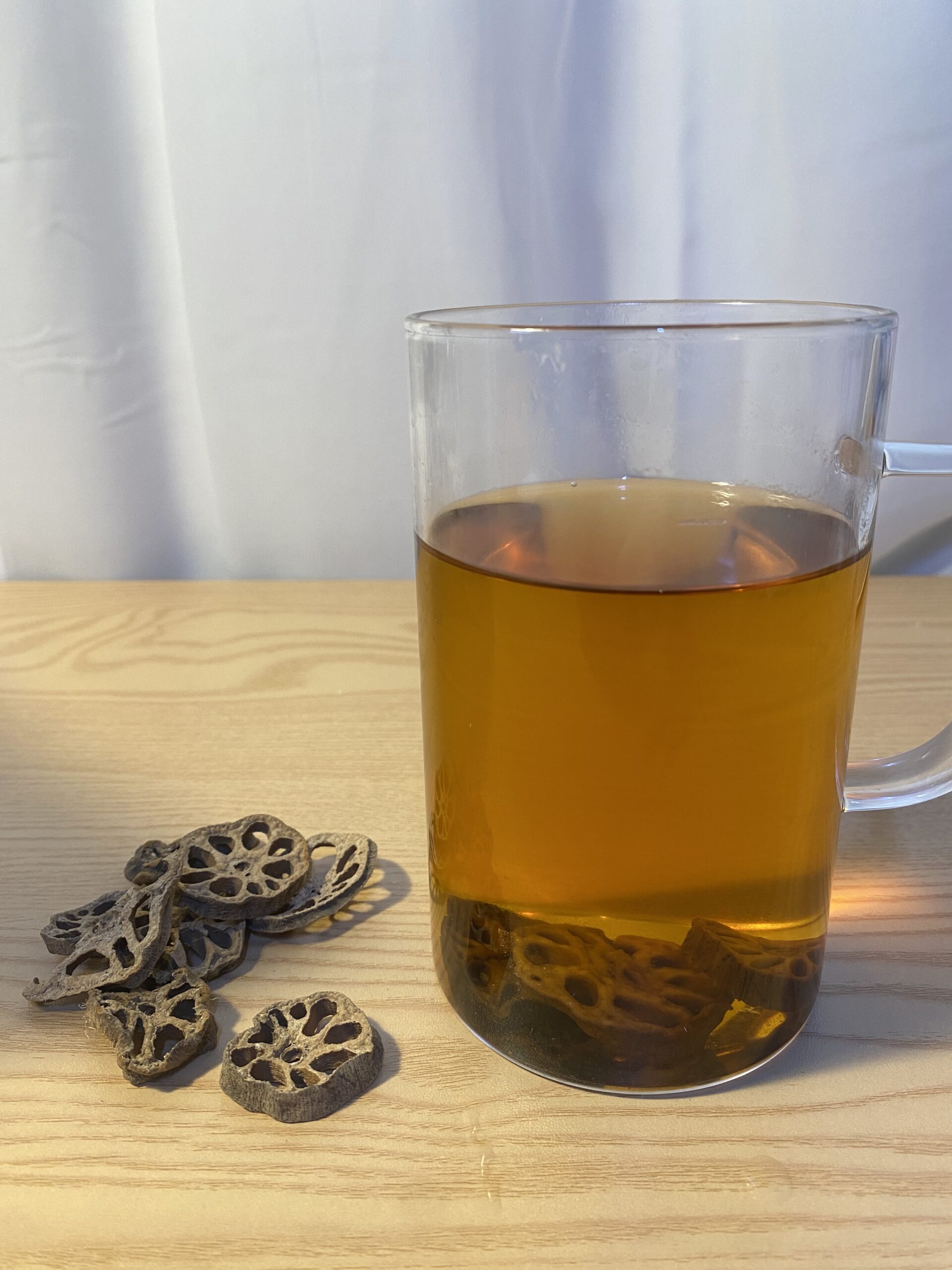
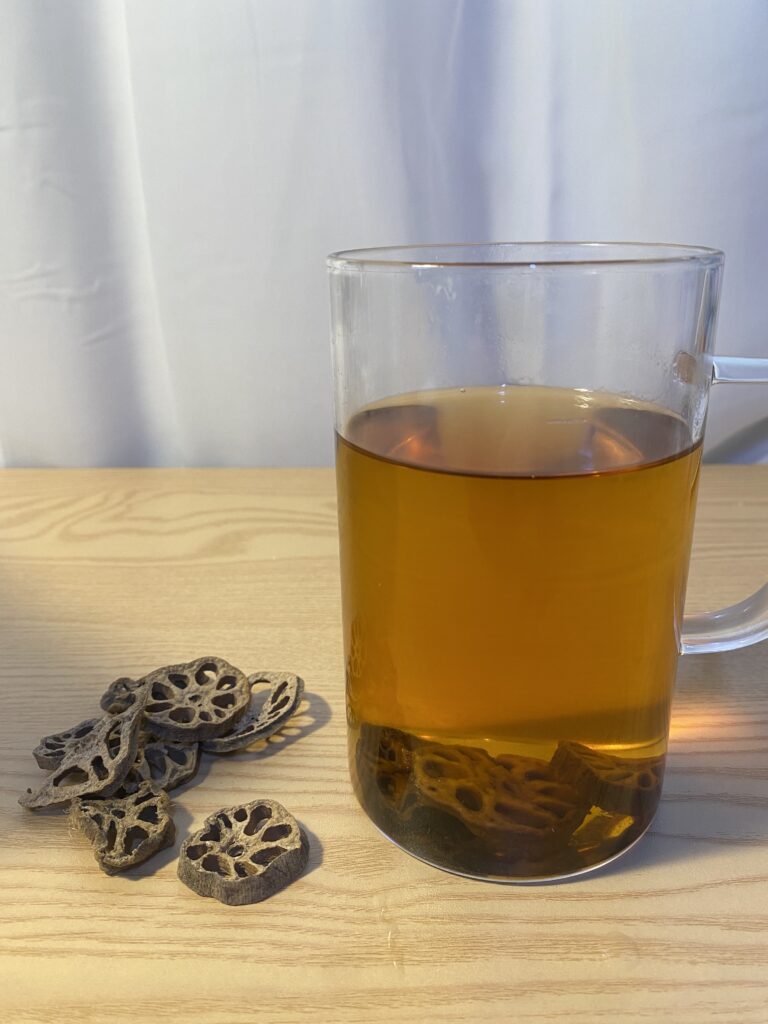
- Wait for 3 minutes. Watch the water turn a soft, golden amber. This visual transition is part of the therapy. The taste is nutty, earthy, and naturally sweet—no honey required.
② The “On-the-Go” Office Routine (The Tumbler Method)
This is my secret for staying sharp and de-puffed during back-to-back meetings.
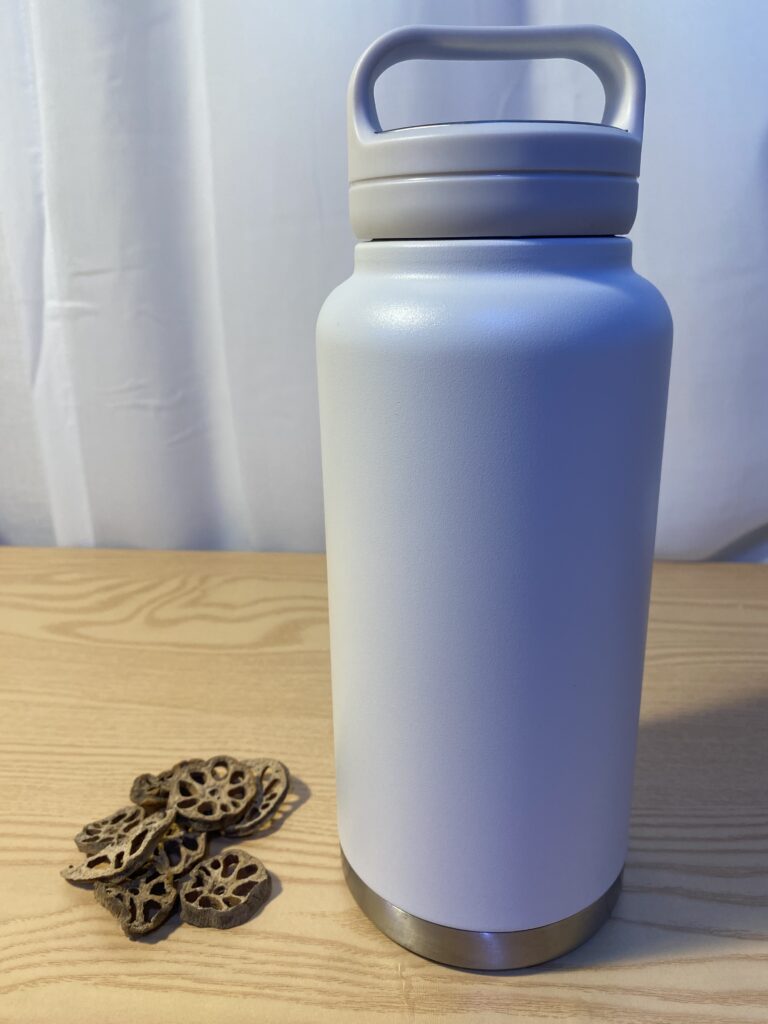
- Drop 3 to 5 slices of lotus root into a 500ml thermal flask or insulated tumbler.
- Fill with hot water before you leave for the office.
- The beauty of lotus root is that it does not become bitter like green tea. It actually becomes richer the longer it steeps. Sip it throughout the day to combat the “office bloat” caused by sitting for long hours.
4. The Ugly Truth: The “Greenwashing” of Herbal Teas
As a Brand Planner, my job is to expose the dark side of “Natural” products. Just because a box has a pretty flower on it doesn’t mean it’s detoxifying your body. Here is the Dark Truth about mass-produced lotus root tea:
- The Pesticide Sponge: Because lotus roots grow deep in the mud, they act as a “sponge” for whatever is in the soil. If the farm uses heavy chemical fertilizers, those toxins are concentrated in the root. You aren’t drinking a detox; you’re drinking a chemical cocktail.
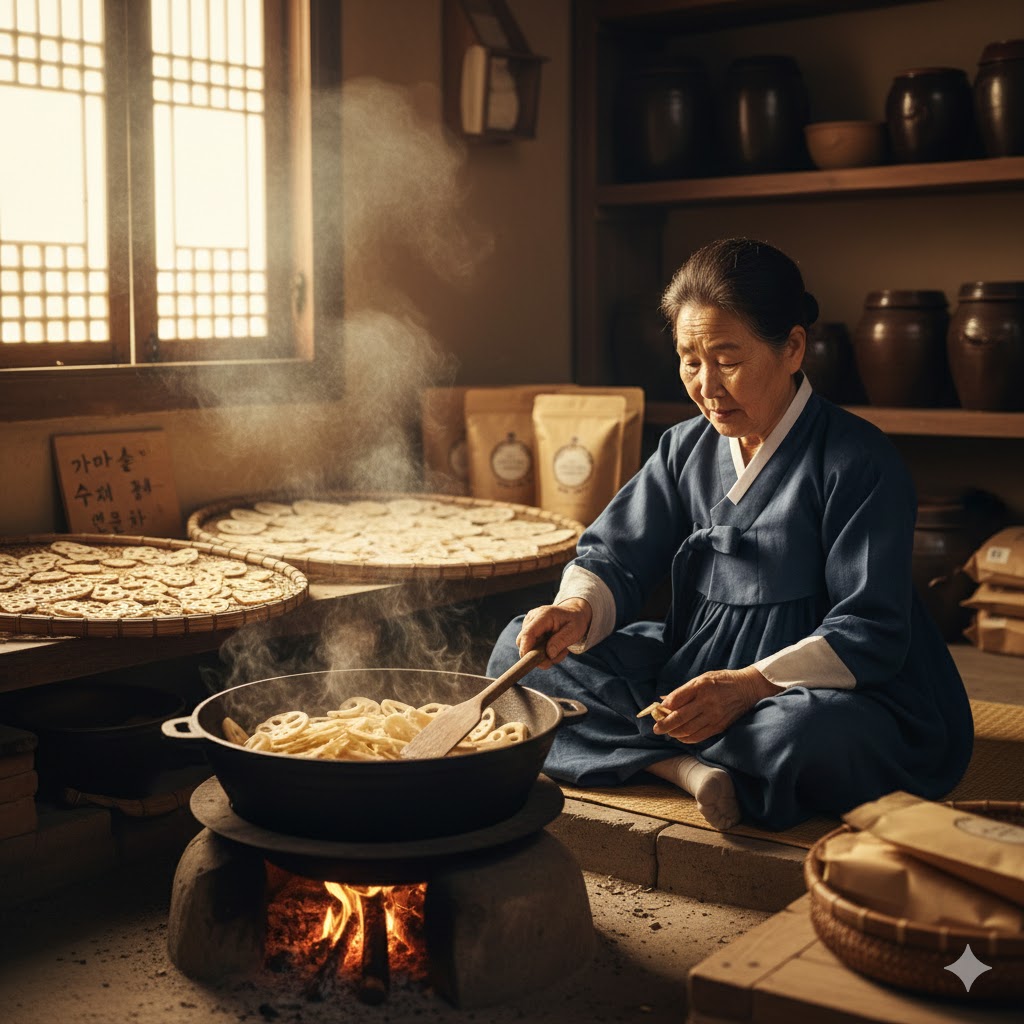
- The High-Heat Destruction: To maximize profit, many industrial companies use high-heat ovens to dry the roots in minutes. This kills the delicate enzymes. What you get is a “dead” tea that tastes like burnt wood.
- The Microplastic Trap: Many “premium” brands use nylon pyramid tea bags. When you pour boiling water over them, they release billions of microplastics. You are trying to heal your gut, but the plastic is causing more inflammation.
5. Bridget’s Checklist: How to Spot “The Real One”
To protect your hormones and your wallet, follow these three non-negotiable rules:
- ✅ Origin: Product of Korea. Korea has a thousand-year history of “Ddeok-eum” (traditional roasting). Our soil standards for medicinal herbs are among the highest in Asia.
- ✅ Method: The “9-Times” Rule. The best lotus root tea is dried at low temperatures and roasted multiple times. This caramelizes the natural sugars and locks in the tannins.
- ✅ Packaging: Loose Leaf or PLA-Certified. If you must use a tea bag, ensure it is made from cornstarch (PLA) or just use a stainless steel infuser with loose-leaf slices.
6. Conclusion: Design Your Daily Ritual
Wellness isn’t about a “3-day crash course.” It’s about the rituals you design for your life. My routine is simple: I replace my second cup of coffee with a warm mug of lotus root tea. It centers my mind, depuffs my body, and respects my biology.
If you are ready to stop fighting the bloat and start flushing the inflammation, check out my Top 3 Ethical Picks from Korea below.
Stop Eating Dynamite! The Dark Truth of Himalayan Pink Salt (Eco-Guide)