Are You Drinking “Explosives” Every Morning?
If you read my previous post, you probably started the [Korean Salt Water Detox] routine. But before you rush to the grocery store to grab the cheapest Pink Salt, STOP. 🛑
As a Brand Planner who exposes “Greenwashing,” I have to tell you an uncomfortable truth. That beautiful pink salt in your kitchen might be the product of environmental destruction and explosives.
Today, I will tell you how to distinguish “Real Ethical Salt” from “Industrial Junk” and share my top 3 picks.
The Ugly Truth: Dynamite vs. Hand-Mined
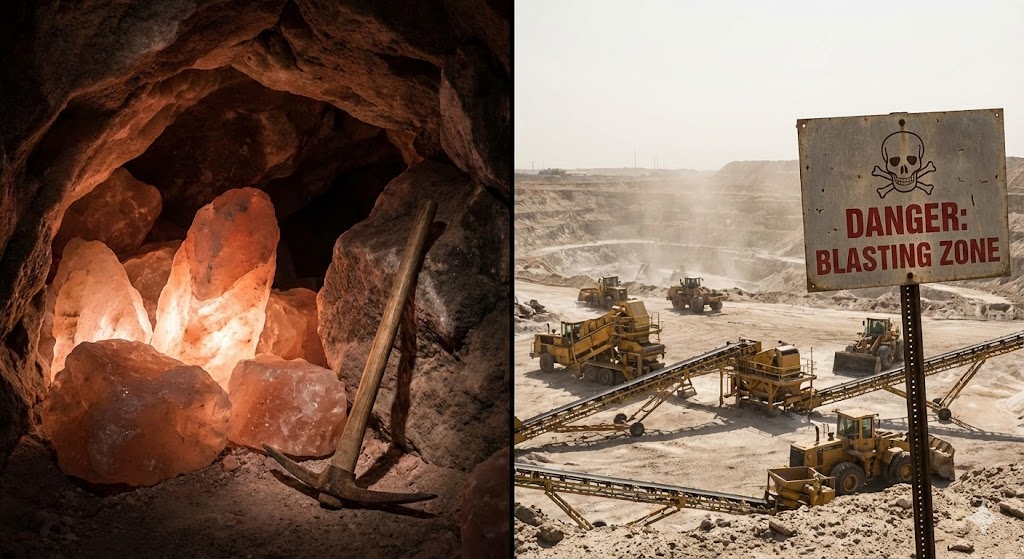
Most people think all Himalayan Salt is natural. Wrong. To cut costs and mass-produce for global supermarkets, many commercial mines use Dynamite Blasting.
- 💥 The Problem: Massive explosions destroy the Himalayan ecosystem. Worse, chemical residues from the explosives can remain on the salt rocks.
- 🚜 The Impact: It is not “Artisanal.” It is industrial mining that exploits nature and workers.
If your salt label doesn’t say “Hand-Mined” or “Traditional Method,” you might be drinking dynamite residue.
Another Villain: Microplastics in Grinders
Do you use those plastic grinders with the built-in mill? Every time you twist that cheap plastic cap to grind your salt, tiny plastic particles (Microplastics) fall into your food along with the salt.
You are drinking salt water to detox, but you are re-toxing with plastic. Irony, right? This is why I advocate for Glass Jars or Paper Packaging.
Bridget’s Checklist: How to Spot “Good” Salt
When I analyze brands, I look for these 3 “Badges of Honor.”
- ✅ Hand-Mined (Crafted): Explicitly states it was harvested manually, preserving the crystal structure and energy.
- ✅ Fair Trade / Ethically Sourced: Ensures the miners are paid fairly and work in safe conditions.
- ✅ Sustainable Packaging: No plastic grinders. Look for refillable glass jars or compostable pouches.
My Top 3 Ethical Picks (No Greenwashing)
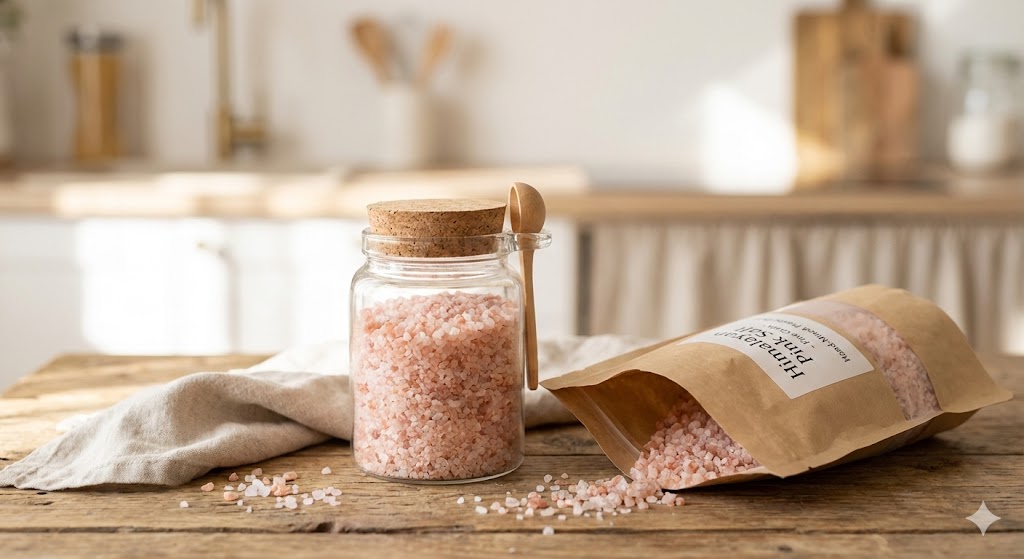
As a picky planner, these are the only brands I keep in my kitchen. (Note: I am not sponsored by these brands. I just love their philosophy.)
1. The “Purist” Choice: [Brand Name A]
- Why: They use ancient hand-mining techniques. The crystals are darker, meaning higher mineral content (Iron, Magnesium).
- Verdict: Best for the morning detox routine.
2. The “Plastic-Free” Hero: [Brand Name B]
- Why: Comes in a beautiful glass jar with a cork lid. Zero plastic waste.
- Verdict: Best for eco-conscious gifts.
3. The “Budget-Friendly” Real Deal: [Brand Name C]
- Why: Ethical sourcing but affordable bulk packaging.
- Verdict: Great for cooking and refilling your jars.
Conclusion: Vote with Your Wallet
“Cheap” salt has hidden costs—costs paid by the Himalayan environment and underpaid miners. Consuming Ethical Salt is the easiest way to respect your body and the Earth simultaneously.
Now that you have the right salt, are you ready to start the routine? If you missed how to do the “K-Salt Flush,” check out my guide below!
Q: Is Pink Salt better than Sea Salt? A: Yes, generally. Sea salt often contains microplastics due to ocean pollution. Ethical Pink Salt from ancient mines is cleaner.
Q: How can I tell if my salt is fake? A: Do the “Water Test.” Dissolve it in water. If pink dye remains or the water turns suspiciously dark pink quickly, it might be dyed artificial salt.
Q: Does it expire? A: Pure salt creates a hostile environment for bacteria, so it effectively lasts forever if kept dry.
Why Korean Actresses Drink “Salty Water” Every Morning (My 2-Week Detox Diary)