This Noble Vegetable is a Biohacker’s Secret Weapon
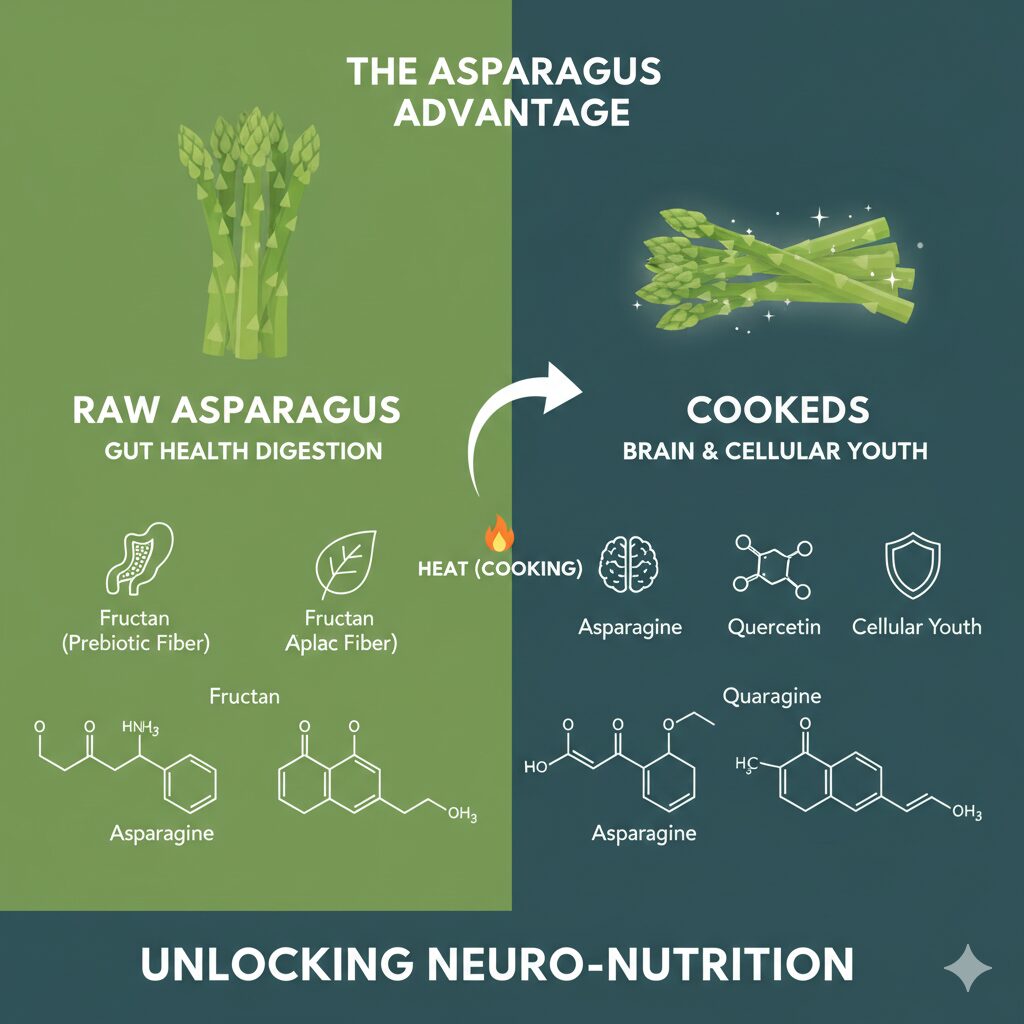
Often seen as a fancy side dish, asparagus holds a far deeper secret for K-Wellness and biohacking. As Brand Planner Bridget June, I believe in precision nutrition. Asparagus isn’t just one food; it’s two, depending on how you prepare it.
This green spear is a powerhouse for your Gut-Brain Axis, the direct communication line between your digestive system and your mind. Citing research from NCBI and the British Journal of Nutrition, I will show you how to choose between raw or cooked asparagus to unlock specific benefits for your body and mind.
1. Raw Asparagus: Your Gut’s Best Friend (Fructans)
When asparagus is raw, its cellular structure remains intact, preserving its unique prebiotic fibers.
- The Science: Raw asparagus is rich in fructans, a type of soluble fiber. Fructans act as a powerful prebiotic, feeding the beneficial bacteria in your gut.
- The Benefit: A thriving gut microbiome is linked to better mood, stronger immunity, and enhanced nutrient absorption. Eating raw (thinly sliced in salads) supports this crucial foundation of health.
2. Cooked Asparagus: A Brain and Cellular Youth Boost (Asparagine & Quercetin)
When you cook asparagus (steaming, roasting, or sautéing), heat breaks down cell walls, making specific compounds more bioavailable.
- Asparagine for Brain Power: Asparagine, an amino acid, gets a significant boost. It plays a vital role in nervous system function, helping with neural communication and reducing mental fatigue. Think of it as a natural brain tonic.
- Quercetin for Cellular Youth: Cooking also increases the bioavailability of Quercetin, a potent flavonoid. Quercetin is a master antioxidant and has been shown to have anti-inflammatory and anti-aging effects at a cellular level. It helps clean up senescent (“zombie”) cells, promoting cellular youth.
3. The “Asparagus Pee” and Detoxification
You’ve probably noticed a distinct smell in your urine after eating asparagus. This is not a bad thing.
- The Mechanism: This smell comes from the breakdown of asparagusic acid, which is unique to asparagus. This compound acts as a natural diuretic, helping your body flush out excess fluids and toxins. It supports kidney health and reduces bloating.
Bridget June’s “Asparagus Advantage” Protocol

To optimize your asparagus intake, consider your current biohacking goals.
- For Gut Health (Raw): If you need a prebiotic boost, thinly shave raw asparagus into salads. Pair it with healthy fats (olive oil) to aid nutrient absorption.
- For Brain & Anti-Aging (Cooked): To unlock Asparagine and Quercetin, lightly steam or roast asparagus. Avoid overcooking to preserve texture and some heat-sensitive nutrients. Pair with lemon for Vitamin C synergy and garlic for its anti-inflammatory properties.
- Portion Control: A serving size is typically 5-6 spears. Overdoing it can cause excess gas due to the fructans.
Conclusion: Master Your Asparagus, Master Your Health
Asparagus is more than just a green vegetable. It’s a strategic food that offers distinct benefits depending on how you prepare it. By understanding the “Asparagus Advantage,” you can precisely target your gut microbiome, boost your brain, and promote cellular youth.
Body Rules the Mind.
생으로? 익혀서? 아스파라거스의 숨겨진 효능을 뇌와 장에 맞게 해킹하는 법 (아스파라거스 어드밴티지)
이 고귀한 채소는 바이오해커의 비밀 병기입니다.
고급 레스토랑의 사이드 메뉴로만 여겨지던 아스파라거스에는 K-웰니스와 바이오해킹을 위한 훨씬 깊은 비밀이 숨어 있습니다. 브랜드 기획자 브리짓준은 정밀 영양을 추구합니다. 아스파라거스는 단순히 한 가지 음식이 아닙니다. 조리법에 따라 두 가지 다른 효능을 가진 음식입니다.
이 녹색 창 모양의 채소는 소화 시스템과 뇌를 직접 연결하는 **’장-뇌 축(Gut-Brain Axis)’**을 위한 강력한 에너지원입니다. NCBI와 *영국 영양학 저널(British Journal of Nutrition)*의 연구를 인용하여, 생 아스파라거스와 익힌 아스파라거스 중 무엇을 선택해야 당신의 몸과 마음에 특정 이점을 줄 수 있는지 알려드리겠습니다.
1. 생 아스파라거스: 당신의 장(腸)을 위한 최고의 친구 (프락탄)
아스파라거스가 생 상태일 때, 세포 구조는 온전히 유지되며 독특한 프리바이오틱 섬유질을 보존합니다.
- 과학적 근거: 생 아스파라거스는 수용성 섬유질의 일종인 **’프락탄(Fructans)’**이 풍부합니다. 프락탄은 강력한 프리바이오틱스 역할을 하여 장 내 유익균의 먹이가 됩니다.
- 효능: 건강한 장 마이크로바이옴은 기분 개선, 면역력 강화, 영양소 흡수 증진과 연결됩니다. 생으로(얇게 썰어 샐러드에) 섭취하는 것은 건강의 이 중요한 토대를 지원합니다.
2. 익힌 아스파라거스: 뇌 기능과 세포 회춘 부스터 (아스파라긴 & 퀘르세틴)
아스파라거스를 익히면(찌거나, 굽거나, 볶으면) 열이 세포벽을 파괴하여 특정 화합물의 생체 이용률을 높입니다.
- 아스파라긴(Asparagine)으로 뇌 활성화: 아미노산인 아스파라긴의 양이 크게 증가합니다. 아스파라긴은 신경계 기능에 중요한 역할을 하며, 신경 전달을 돕고 정신적 피로를 줄여줍니다. 천연 뇌 강장제라고 생각할 수 있습니다.
- 퀘르세틴(Quercetin)으로 세포 젊음: 조리 과정은 강력한 플라보노이드인 **’퀘르세틴’**의 생체 이용률도 높입니다. 퀘르세틴은 뛰어난 항산화제이며, 세포 수준에서 항염증 및 항노화 효과를 보여줍니다. 노화된 (‘좀비’) 세포를 청소하여 세포의 젊음을 촉진하는 데 도움을 줍니다.
3. “아스파라거스 소변”과 해독 작용
아스파라거스를 먹고 나면 소변에서 특유의 냄새가 나는 것을 경험했을 것입니다. 이것은 나쁜 현상이 아닙니다.
- 메커니즘: 이 냄새는 아스파라거스에만 있는 **’아스파라거스산’**이 분해되면서 발생합니다. 이 화합물은 천연 이뇨제 역할을 하여 몸에서 과도한 수분과 독소를 배출하는 데 도움을 줍니다. 이는 신장 건강을 지원하고 부기를 줄여줍니다.
브리짓준의 ‘아스파라거스 어드밴티지’ 프로토콜
아스파라거스 섭취를 최적화하려면 현재의 바이오해킹 목표를 고려하십시오.
- 장 건강을 위해 (생으로): 프리바이오틱스 부스트가 필요하다면, 생 아스파라거스를 얇게 썰어 샐러드에 넣어 드십시오. 영양소 흡수를 돕기 위해 건강한 지방(올리브유)과 함께 섭취하십시오.
- 뇌와 항노화를 위해 (익혀서): 아스파라긴과 퀘르세틴의 효능을 극대화하려면 아스파라거스를 살짝 찌거나 구우십시오. 너무 오래 익히면 식감과 일부 열에 약한 영양소가 손실될 수 있습니다. 비타민 C 시너지를 위해 레몬과, 항염증 효과를 위해 마늘과 함께 드십시오.
- 적정 섭취량: 일반적으로 한 번에 5~6개 정도의 아스파라거스 줄기가 적당합니다. 프락탄 성분 때문에 과도하게 섭취하면 가스가 많이 생길 수 있습니다.
결론: 아스파라거스를 지배하고, 건강을 지배하십시오
아스파라거스는 단순한 녹색 채소 그 이상입니다. 어떻게 조리하느냐에 따라 명확한 이점을 제공하는 전략적인 식품입니다. ‘아스파라거스 어드밴티지’를 이해함으로써, 당신은 장 마이크로바이옴을 정밀하게 관리하고, 뇌를 부스팅하며, 세포의 젊음을 촉진할 수 있습니다.
Body Rules the Mind.