The Current State of Plastic Waste: The Divide Between the US and South Korea
Welcome back to our 100-day journey towards sustainable peak performance. As Bridget June, I consistently emphasize the philosophy that “Body Rules the Mind.” However, this optimization must not stop at our skin. Our external environment is a direct extension of our internal biology; the microplastics we discard inevitably return to our bloodstream. Today, we must confront the escalating global plastic crisis through a critical, data-driven lens.
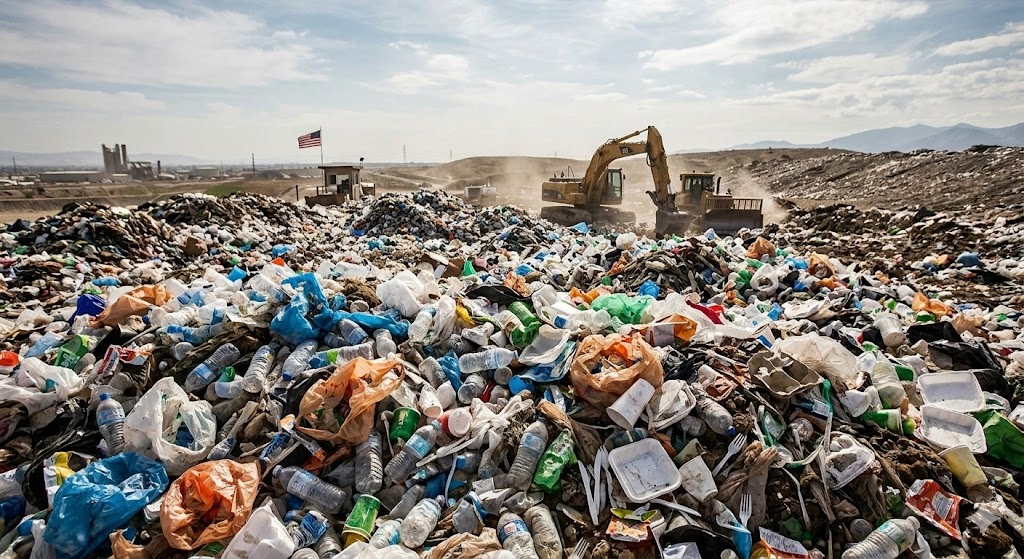
When we analyze global waste management, the disparity between nations is staggering. South Korea has established one of the world’s most meticulous, multi-tiered waste separation systems, known as the Volume-based Waste Fee System (Jongnyangje). This system actively forces consumers to separate plastics by type (PET, PP, PS), achieving highly efficient recycling streams. In stark contrast, the United States still heavily relies on single-stream recycling, where all recyclables—and often non-recyclables—are mixed into one bin. According to data published by the Environmental Protection Agency (EPA) and later analyzed in Science Advances, the US plastic recycling rate hovered at a mere 8.7% in 2018, and recent estimates suggest it has plummeted further to between 5% and 6%. Millions of tons of plastic are sent directly to US landfills annually. Globally, the OECD (Organisation for Economic Co-operation and Development) reports that a dismal 9% of all plastic waste produced worldwide is successfully recycled.
The European Benchmark: Leading the Charge in Eco-Hacking
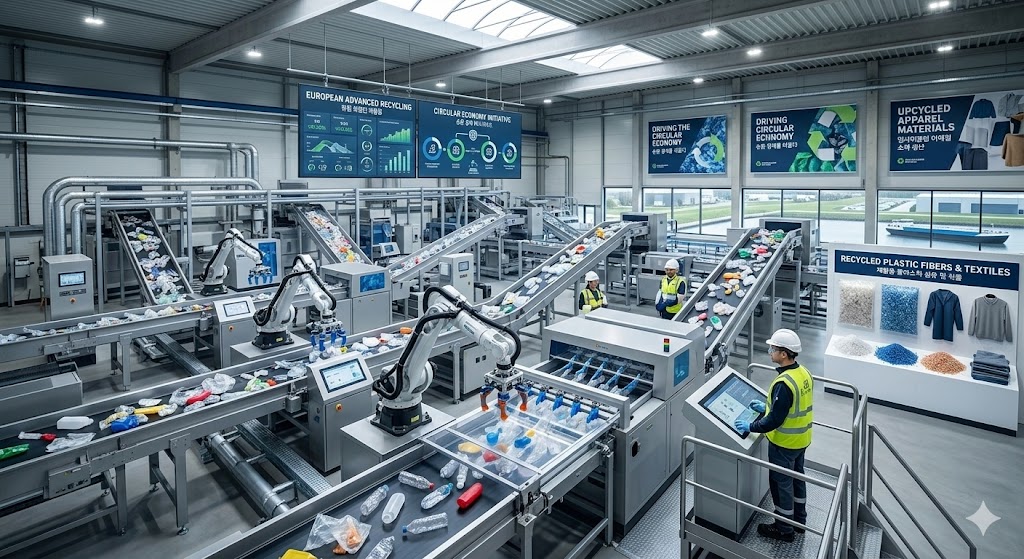
To understand what effective global action looks like, we must turn to Europe. The European Union has positioned itself as the definitive benchmark for environmental policy by treating plastic not as disposable waste, but as a continuous, valuable resource.
The EU enforces stringent, legally binding regulations, primarily through the Circular Economy Action Plan (CEAP) and the Single-Use Plastics (SUP) Directive. These comprehensive frameworks compel businesses to adhere to Extended Producer Responsibility (EPR) schemes. EPR ensures that manufacturers bear the financial and physical cost of their product’s end-of-life, incentivizing them to design for recyclability from day one. Eurostat data reveals that this top-down regulatory pressure yields tangible results: nations like Slovakia, Belgium, and Germany are achieving plastic packaging recycling rates exceeding 50%. They achieve this through heavy investments in advanced, automated infrared sorting infrastructure and strict standardization of packaging materials.
The Future Direction: Designing Out Waste and Upcycling
We cannot simply “recycle” our way out of this crisis using outdated, linear (take-make-dispose) methods. The future direction of global ESG strategies must pivot entirely toward a true “Circular Economy.”
As an expert guiding sustainable lifestyle choices and brand planning, I advocate for businesses to adopt an “eco-hacking” mindset. The circular economy dictates that products must be designed from their inception to eliminate waste completely. This means prioritizing highly recyclable or upcycled materials, such as turning discarded PET bottles into premium, durable textiles for eco-friendly apparel. Brands must phase out mixed-material plastics that are impossible to separate and instead build transparent, sustainable supply chains. Real change requires integrated, systemic evolution where corporate ESG responsibility and conscious consumerism align perfectly to heal our planetary ecosystem.
Related Biohacking & ESG Insights
To explore more about how sustainable ESG business practices align with human optimization and upcycled living, and to join my ongoing 100-day challenge, visit my official platform at bridgetjune.com.
글로벌 플라스틱 위기: 국가별 재활용 시스템의 차이점과 순환 경제
플라스틱 폐기물의 현주소: 미국과 한국의 극명한 시스템 차이
지속 가능한 최적의 퍼포먼스를 위한 100일 챌린지에 오신 것을 환영합니다. 완성형 전문가 브리짓준입니다. 저는 항상 “Body Rules the Mind(신체가 정신을 지배한다)”라는 철학을 강조해 왔습니다. 하지만 이러한 최적화는 우리의 피부 끝에서 멈춰서는 안 됩니다. 우리의 외부 환경은 내부 생물학적 상태의 직접적인 연장선이며, 우리가 무심코 버린 미세 플라스틱은 결국 우리의 혈류로 다시 돌아옵니다. 오늘 우리는 철저한 데이터 기반의 시각으로 전 세계적으로 심화되고 있는 플라스틱 위기를 직면해야 합니다.
글로벌 폐기물 관리 실태를 분석해 보면 국가 간의 격차는 놀라울 정도입니다. 한국은 종량제라는 세계에서 가장 철저하고 세분화된 분리수거 시스템을 구축했습니다. 소비자가 직접 페트(PET), 폴리프로필렌(PP) 등 플라스틱을 재질별로 분리하도록 유도하여 매우 효율적인 재활용 스트림을 달성하고 있습니다. 반면, 미국의 현실은 매우 다릅니다. 미국의 많은 지역에서는 여전히 모든 재활용품(종종 일반 쓰레기까지)을 하나의 수거함에 섞어 버리는 ‘단일 배출(Single-stream)’ 방식에 크게 의존하고 있습니다. 미국 환경보호청(EPA)의 데이터와 Science Advances에 발표된 연구에 따르면, 2018년 미국의 플라스틱 재활용률은 8.7%에 불과했으며, 최근 추정치에 따르면 이 수치는 5~6% 수준까지 추락했습니다. 전 세계적인 지표 역시 즉각적인 개입이 필요함을 시사합니다. 경제협력개발기구(OECD)의 보고에 따르면, 전 세계적으로 배출되는 플라스틱 폐기물 중 성공적으로 재활용되는 비율은 단 9%에 그치고 있습니다.
유럽의 벤치마크: 에코해킹(Eco-Hacking)을 선도하는 정책
실질적이고 효과적인 글로벌 대응이 어떤 모습인지 이해하려면 유럽을 주목해야 합니다. 유럽연합(EU)은 플라스틱을 일회용 쓰레기가 아닌 지속 가능하고 가치 있는 자원으로 취급하며 환경 정책의 글로벌 벤치마크로 확고히 자리 잡았습니다.
EU는 ‘순환 경제 실행 계획(CEAP)’과 ‘일회용 플라스틱(SUP) 지침’을 통해 법적 구속력이 있는 매우 엄격한 규제를 시행하고 있습니다. 이 포괄적인 프레임워크는 기업이 ‘생산자 책임 확대(EPR)’ 제도를 의무적으로 준수하도록 강제합니다. EPR은 제조사가 자사 제품의 폐기 단계까지 재정적, 물리적 책임을 지도록 하여, 제품 기획 단계부터 재활용을 고려한 설계를 하도록 유도합니다. 유럽통계청(Eurostat)의 데이터는 이러한 하향식 규제 압력이 확실한 결과를 만들어낸다는 것을 보여줍니다. 독일, 벨기에, 슬로바키아 등의 국가는 고도화된 적외선 자동 분류 인프라에 대한 막대한 투자와 포장재 표준화를 통해 50%를 상회하는 플라스틱 포장재 재활용률을 달성하고 있습니다.
우리가 나아갈 방향: 폐기물을 원천 차단하는 설계와 업사이클링
단순히 쓰레기를 분리수거하는 선형적(생산-소비-폐기) 방식으로는 이 거대한 위기를 극복할 수 없습니다. 향후 글로벌 ESG 전략의 핵심 방향은 진정한 의미의 ‘순환 경제(Circular Economy)’로 완전히 전환되어야 합니다.
지속 가능한 라이프스타일과 브랜드 기획을 안내하는 전문가로서, 저는 기업들이 ‘에코해킹(Eco-hacking)’ 마인드셋을 채택해야 한다고 주장합니다. 순환 경제 모델은 제품의 기획 단계부터 폐기물이 발생하지 않도록 근본적으로 설계(Design out waste)할 것을 요구합니다. 이는 버려진 페트(PET)병을 고품질의 내구성 있는 친환경 어패럴 섬유로 재탄생시키는 업사이클링 소재를 적극적으로 도입하는 것을 포함합니다. 브랜드들은 분리가 불가능한 혼합 플라스틱 소재의 사용을 단계적으로 폐지하고, 투명하고 지속 가능한 공급망을 구축해야 합니다. 기업의 진정성 있는 ESG 책임과 의식 있는 소비자의 선택이 완벽하게 맞물릴 때 비로소 우리의 지구 생태계를 치유할 수 있습니다.
관련 바이오해킹 및 ESG 인사이트
지속 가능한 ESG 비즈니스 전략이 어떻게 인간의 퍼포먼스 최적화 및 업사이클링 라이프스타일과 연결되는지 더 깊이 알아보고, 브리짓준의 100일 챌린지에 동참하고 싶다면 bridgetjune.com을 방문해 주시기 바랍니다.
The content provided on this website, including all text, graphics, images, and other materials, is for informational and educational purposes only. The biohacking protocols, recipes, and lifestyle insights shared by Bridget June are based on personal experience and independent research. This information is not intended to be a substitute for professional medical advice, diagnosis, or treatment. Always seek the advice of your physician or other qualified healthcare provider with any questions you may have regarding a medical condition or before implementing any new diet, supplement, or health regimen.
의료적 주의사항
본 웹사이트에서 제공되는 모든 텍스트, 그래픽, 이미지 및 기타 자료를 포함한 콘텐츠는 오직 정보 제공 및 교육적 목적으로만 작성되었습니다. 브리짓준(Bridget June)이 공유하는 바이오해킹 프로토콜, 레시피 및 라이프스타일 인사이트는 개인적인 경험과 독립적인 연구 데이터를 바탕으로 합니다. 이 정보는 전문적인 의학적 조언, 진단 또는 치료를 대신할 수 없습니다. 새로운 식단이나 건강 요법을 시작하기 전에는 항상 주치의와 상담하시기 바랍니다.