[Introduction] In the modern food industry, “efficiency” has often become a synonym for “compromise.” As someone who has managed a coffee franchise with 50 locations and launched successful F&B brands, I’ve always looked at business through the lens of a capitalist. However, there is a point where industrial efficiency threatens our most fundamental asset: our health. Today, I want to talk about GMOs (Genetically Modified Organisms)—not just as a health concern, but as a critical factor in the “Biohacking” and “Smart Aging” lifestyle that defines the Bridget June brand.
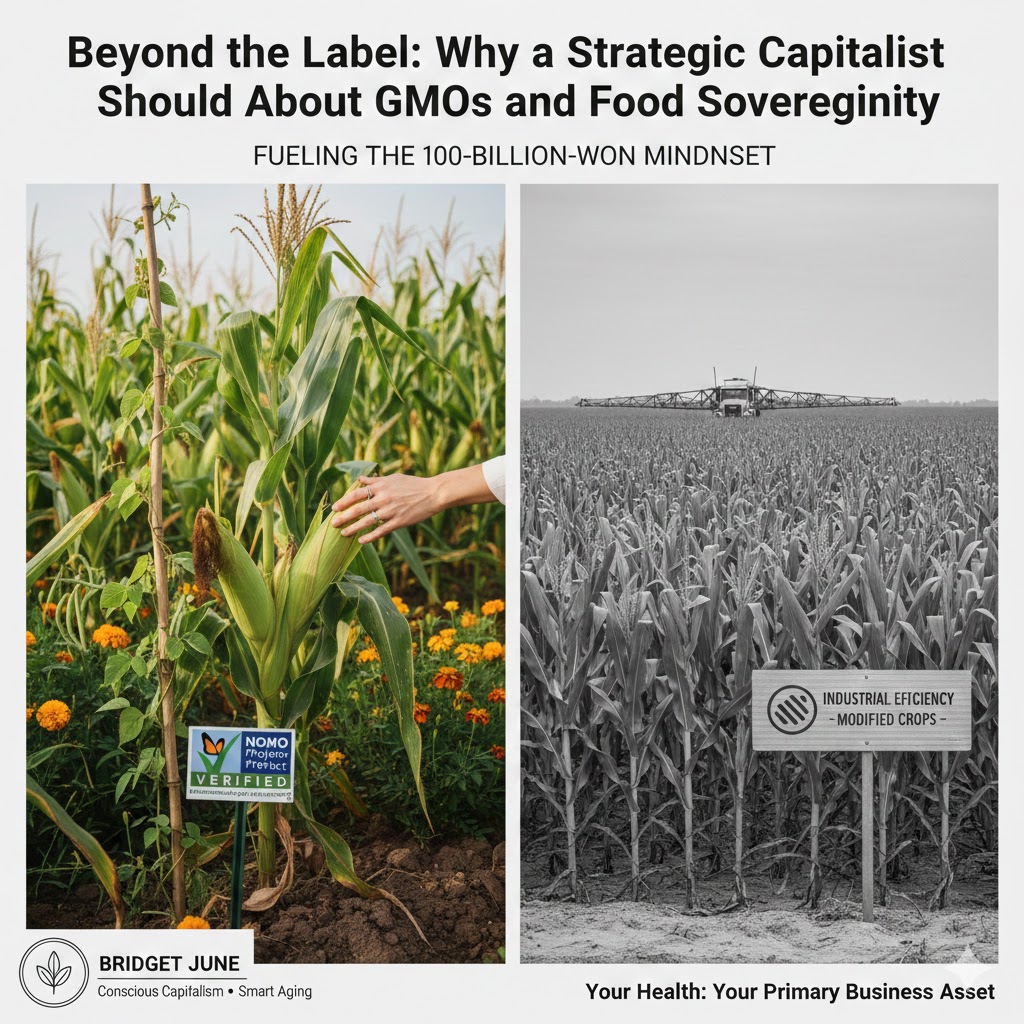
[What is GMO? The Hidden Reality] GMO stands for Genetically Modified Organism. It refers to plants or animals whose genetic material has been altered in a laboratory to create combinations that do not occur in nature. While proponents argue that GMOs increase crop yields and resistance to pests, we must ask: At what cost? For those of us focusing on an anti-inflammatory diet and maintaining low inflammation levels, the introduction of foreign proteins into our gut can be a significant trigger.
[The Capitalist Perspective on Food Quality] I often say that I am not an environmental activist, but a thorough capitalist. In business, quality is the ultimate survival strategy. Just as I obsessed over finding the best eco-friendly fabrics for my apparel line to ensure the perfect fit and durability, we must be equally obsessive about the “fuel” we put into our bodies. GMO-heavy diets often correlate with highly processed foods that lead to chronic inflammation—the silent killer of productivity and long-term wealth building.
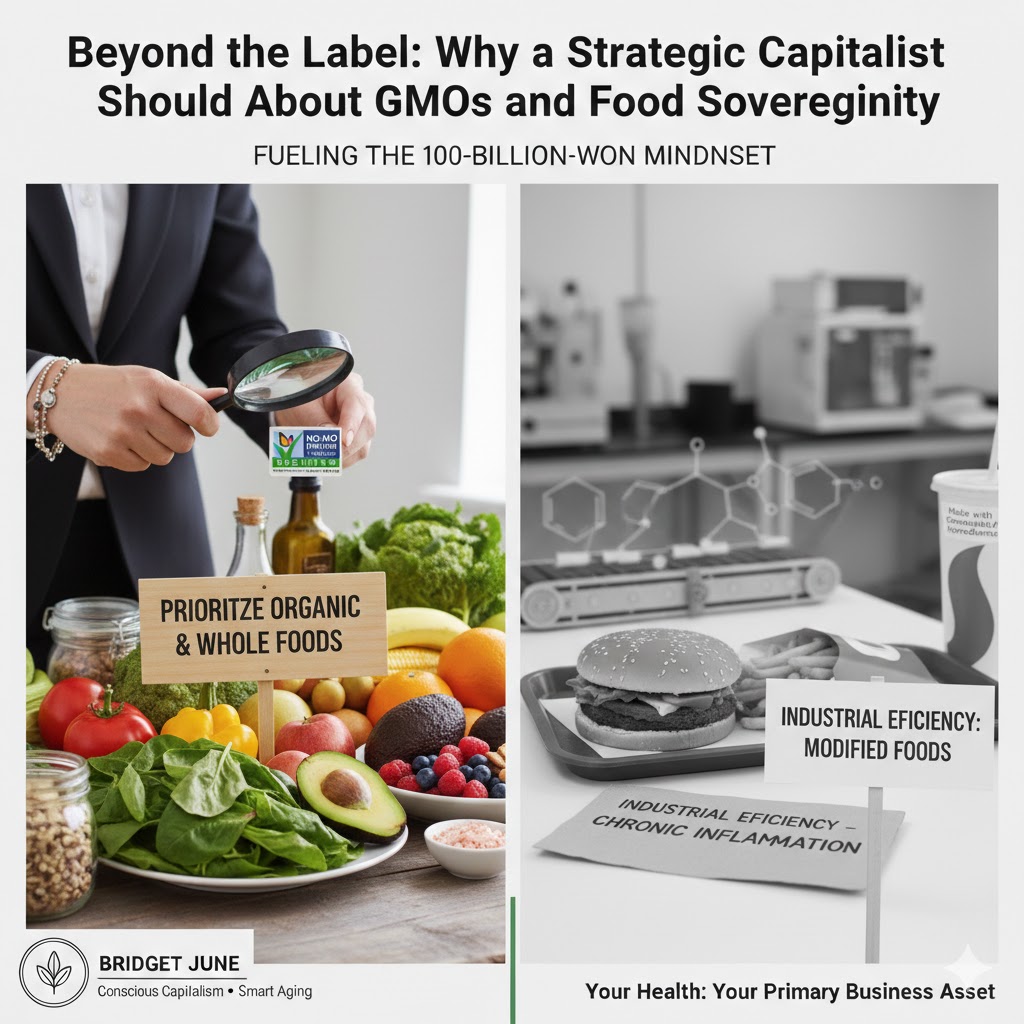
[Biohacking Your Diet: Practical Steps] If your goal is to become a high-asset individual with a strong mind and body, you cannot afford to ignore food labels. Here is how I approach a non-GMO lifestyle:
- Prioritize Organic: Look for the “Non-GMO Project Verified” or “Organic” labels, which strictly prohibit GMOs.
- Focus on Whole Foods: GMOs are most prevalent in processed oils (corn, canola, soybean) and sweeteners (high-fructose corn syrup). By sticking to a whole-food, anti-inflammatory diet—like my morning ritual of pink salt water and olive oil—you naturally avoid these hidden toxins.
- Question the Source: Whether it’s the beans for your daily coffee or the fabric of your clothes, always ask: Is this sustainable? Is this genuine?
[Conclusion: Genuine Authenticity] True luxury is not about being “flashy”; it’s about the “Kku-An-Kku” (effortlessly chic) attitude of choosing substance over appearance. Choosing non-GMO food is a commitment to your future self. It’s about building a body that can sustain the 100-billion-won mindset.
To all the CEOs and visionaries reading this: Your health is your primary business asset. Don’t let industrial efficiency bankrupt your most important investment.
– From Bridget June