Introduction: The Original Korean Digestive Biohack
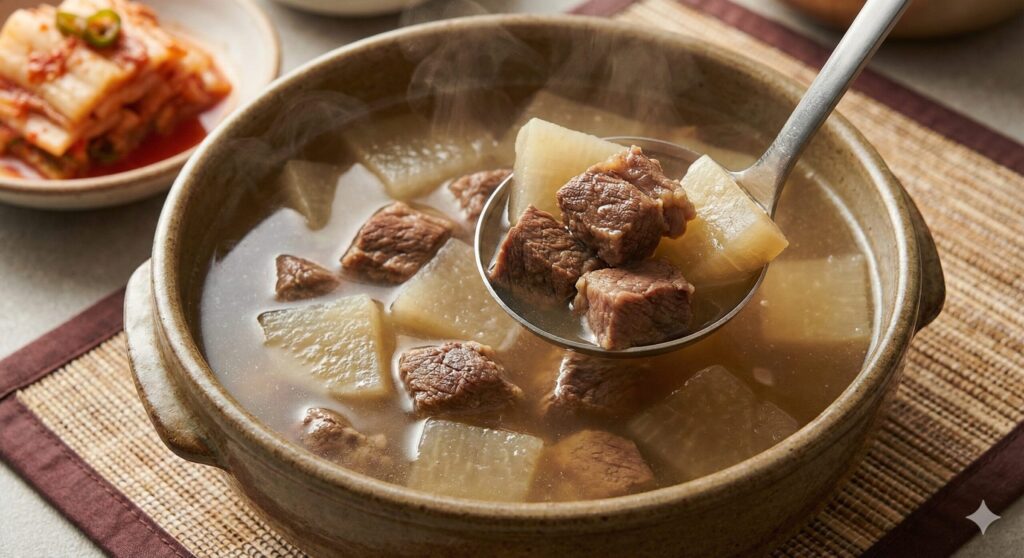
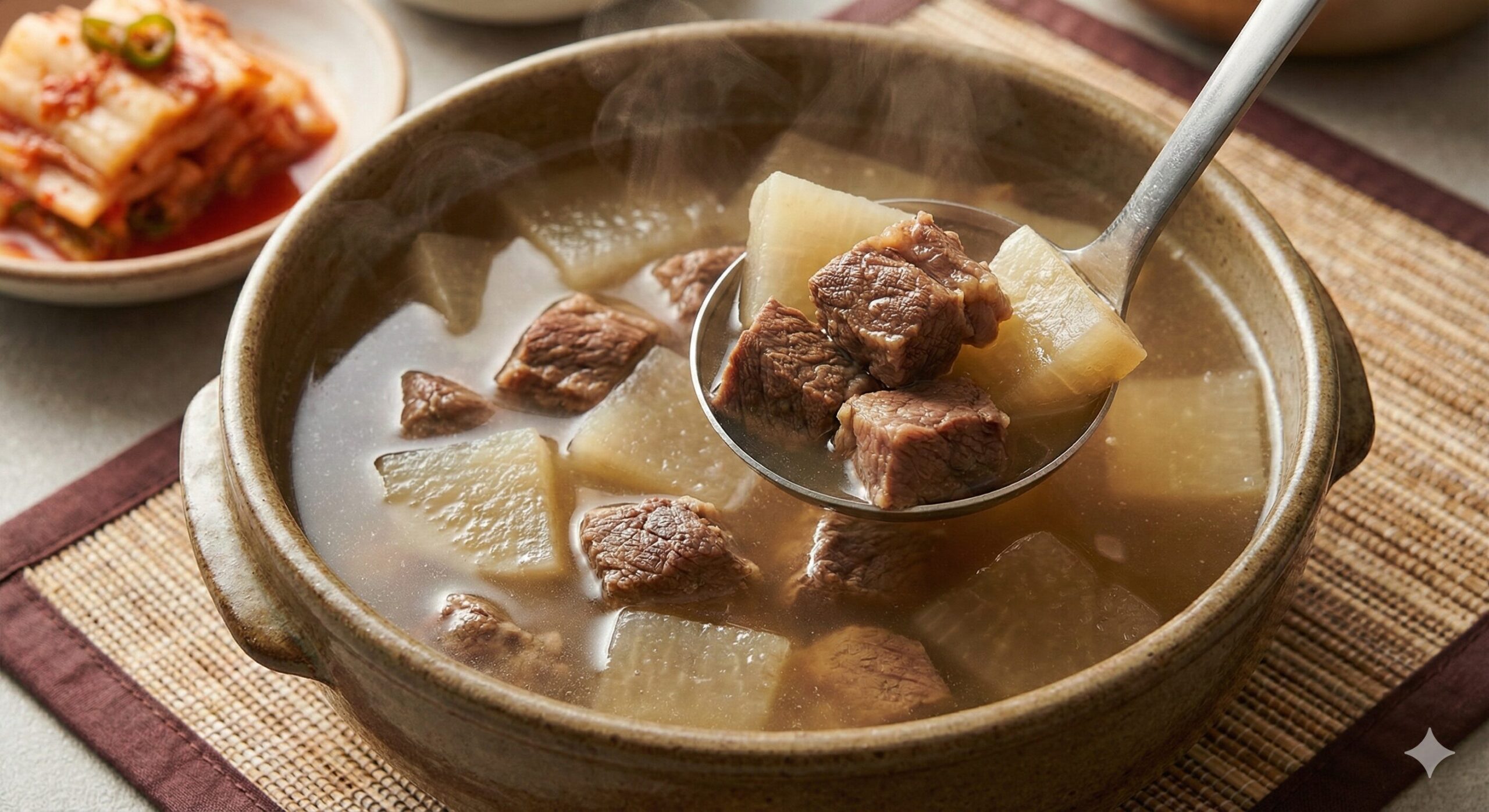
Forget expensive digestive enzyme supplements. The ultimate solution for gut health and soothing digestion has been in the Korean kitchen for centuries: Beef Radish Soup (Sogogi-muguk). This isn’t just a watery broth; this “loaded version” is a hearty, nutrient-dense stew packed with high-quality beef protein and massive amounts of Korean radish. It is designed to be a complete meal that supports metabolic function, repairs the gut lining with slow-cooked collagen, and provides a natural enzymatic boost to break down a heavy meal. Body Rules the Mind.
The Science of the Recipe: Natural Enzymes, Heme Iron, and Gut Repair
This recipe utilizes the synergy of animal protein and root vegetables to optimize digestion and energy production.
The Enzymatic Powerhouse (Korean Radish) Korean radish (Mu) is much more than fiber and water. It is a potent source of natural digestive enzymes, most notably diastase (amylase), which breaks down carbohydrates, and esterase, which helps break down fats. According to studies referenced by the National Center for Biotechnology Information (NCBI), these enzymes remain active when consumed, actively assisting the body’s own pancreatic enzymes in processing food, reducing bloating, and improving nutrient absorption. We use a large amount of radish to maximize this effect.
Heme Iron and Complete Protein (Grass-fed Beef) By loading this soup with a generous amount of beef brisket or shank, we transform it into a high-protein meal. Beef provides highly bioavailable heme iron, essential for oxygen transport and preventing fatigue. Furthermore, slow-simmering the connective tissues in these cuts releases gelatin and collagen, amino acid structures that are critical for repairing and maintaining the integrity of the gut mucosal lining (leaky gut prevention).
The Allicin Immune Boost (Garlic & Scallions) Generous amounts of garlic and scallions provide sulfur compounds, precursors to allicin. These compounds support the liver’s Phase II detoxification pathways and offer natural antimicrobial properties, further supporting a healthy gut microbiome.
Exact Ingredients (Serves 3-4 generously with lots of solids)
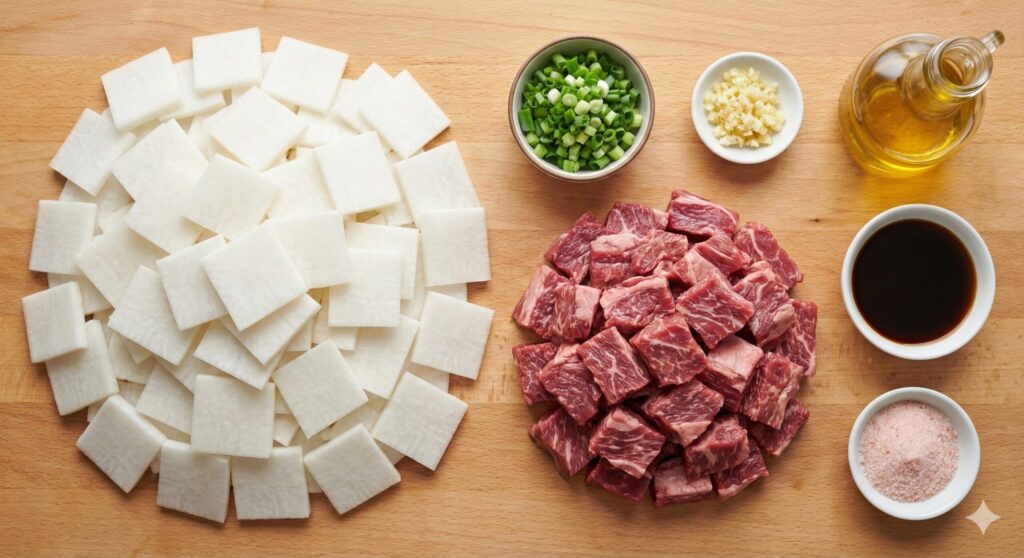
- Beef Brisket or Shank (Yangji or Satae): 300g (Cut into bite-sized, thin squares – Grass-fed preferred)
- Korean Radish (Mu): 500g (Peeled and cut into thin, bite-sized squares, similar size to the beef)
- Filtered Water: 1.5 Liters (Adjust slightly depending on desired thickness, but keep it concentrated)
- Green Onion (Scallions): 2 stalks (Finely chopped)
- Fresh Garlic: 1 tablespoon (Approx. 3 cloves, minced)
- Cold-Pressed Perilla Oil (or Sesame Oil): 1 tablespoon (15ml) – For initial sautéing.
- Soup Soy Sauce (Guk-ganjang): 2 tablespoons (30ml) – Essential for deep, savory flavor.
- Pink Himalayan Salt: 1 teaspoon (Approx. 6g) – Adjust to taste at the end.
- Freshly Cracked Black Pepper: 1/2 teaspoon
Step-by-Step Instructions
- The Lipid Bloom (Sautéing): Place a large, heavy-bottomed pot over medium heat. Add the cold-pressed perilla oil. Once shimmering, add the sliced beef. Sauté for 2-3 minutes until the beef is mostly browned. This step renders the fat and creates the base flavor (Maillard reaction), preventing the soup from tasting raw or bloody.
- Radish Integration: Add the sliced radish to the pot with the beef. Stir-fry together for another 3-4 minutes until the edges of the radish start to turn translucent. This pre-cooking helps the radish absorb the beef fat and flavor.
- The Simmer Initiation: Pour in the 1.5 liters of filtered water. Add the soup soy sauce (guk-ganjang) and minced garlic. Bring the pot to a rolling boil over high heat.
- The Clarification Protocol (Skimming): Once boiling, a layer of gray foam/scum will rise to the surface. This consists of coagulated blood proteins and impurities. Meticulously skim this off with a ladle or fine-mesh strainer for about 5 minutes until the broth is relatively clear. This ensures a clean-tasting, pure soup.
- Slow Extraction: Reduce the heat to medium-low, cover the pot partially with a lid, and let it simmer gently for at least 20-30 minutes. The radish should become completely soft and practically melt in your mouth, and the beef should be tender.
- Final Seasoning and Aromatics: Taste the broth. Add the pink Himalayan salt to achieve your desired salinity. Stir in the chopped green onions and freshly cracked black pepper. Let it bubble for 1 more minute to release the scallion aroma, then turn off the heat.
- Serve: Ladle a generous amount of the solid-rich soup into bowls. It is best enjoyed warm, perhaps with a small side of kimchi to complete the gut-health synergy.
Bridget June’s Anti-inflammatory & Biohacking Tips
- Don’t Overcook the Radish (Too Much): While we want soft radish, boiling it for hours can degrade some of its heat-sensitive Vitamin C. The 30-minute simmer point is the sweet spot for maximizing enzyme availability while achieving the desired texture.
- The Power of Perilla Oil: Using cold-pressed perilla oil for the initial sauté adds a unique nutty flavor and a dose of plant-based Omega-3s (ALA). If you prefer a more classic taste, sesame oil works, but perilla oil offers a better fatty acid profile for biohacking.
Total Calories: Approximately 250 kcal per large serving (A nutrient-dense, high-protein, low-carb soup).
바이오해킹 소고기 무국 레시피: 궁극의 소화 효소 및 단백질 스튜 (건더기 가득 버전)
들어가며: 한국의 오리지널 소화 바이오해킹
비싼 소화 효소 보충제는 잊으십시오. 장 건강과 편안한 소화를 위한 궁극의 솔루션은 수 세기 동안 한국의 부엌에 있었습니다. 바로 ‘소고기 무국’입니다. 이것은 단순한 묽은 국물이 아닙니다. 이 “건더기 가득 버전”은 고품질 소고기 단백질과 엄청난 양의 무로 꽉 찬 든든하고 영양 밀도가 높은 스튜입니다. 이것은 대사 기능을 지원하고, 천천히 조리된 콜라겐으로 장 점막을 복구하며, 과식 후 음식을 분해하는 천연 효소 부스트를 제공하도록 설계된 완전한 식사입니다. 육체가 정신을 지배합니다(Body Rules the Mind).
레시피의 과학: 천연 효소, 헴철, 그리고 장 복구
이 레시피는 동물성 단백질과 뿌리채소의 시너지를 활용하여 소화와 에너지 생산을 최적화합니다.
효소의 발전소 (무) 한국의 무는 단순한 섬유질과 수분 그 이상입니다. 무는 천연 소화 효소의 강력한 공급원입니다. 특히 탄수화물을 분해하는 디아스타아제(아밀라아제)와 지방 분해를 돕는 에스테라아제가 풍부합니다. *미국 국립생물공학정보센터(NCBI)*에서 참조한 연구에 따르면, 이러한 효소는 섭취 시 활성 상태를 유지하여 신체의 췌장 효소가 음식을 처리하는 것을 적극적으로 돕고, 복부 팽만감을 줄이며, 영양소 흡수를 개선합니다. 우리는 이 효과를 극대화하기 위해 많은 양의 무를 사용합니다.
헴철과 완전 단백질 (목초 사육 소고기) 이 국에 소고기 양지머리나 사태를 넉넉히 넣음으로써 우리는 이것을 고단백 식사로 탈바꿈시킵니다. 소고기는 산소 운반과 피로 예방에 필수적인 생체 이용률이 높은 헴철을 제공합니다. 또한, 이러한 부위의 결합 조직을 천천히 끓이면 장 점막의 온전함을 복구하고 유지하는 데 중요한 아미노산 구조인 젤라틴과 콜라겐이 방출됩니다(장 누수 예방).
알리신 면역 부스트 (마늘 & 대파) 넉넉한 양의 마늘과 대파는 알리신의 전구체인 황 화합물을 제공합니다. 이러한 화합물은 간의 2단계 해독 경로를 지원하고 천연 항균 특성을 제공하여 건강한 장내 마이크로바이옴을 추가로 지원합니다.
원재료 준비 (건더기 많은 3~4인분 기준)
- 소고기 양지 또는 사태: 300g (한 입 크기의 얇은 사각형으로 절단 – 목초 사육 선호)
- 무: 500g (껍질을 벗기고 소고기와 비슷한 크기의 얇은 사각형으로 나박썰기)
- 정수 물: 1.5리터 (원하는 농도에 따라 약간 조절하되, 진하게 유지)
- 대파: 2줄기 (잘게 다짐)
- 다진 마늘: 1큰술 (약 3쪽 분량)
- 냉압착 생들기름 (또는 참기름): 1큰술 (15ml) – 초기 볶음용.
- 국간장: 2큰술 (30ml) – 깊은 감칠맛을 위해 필수.
- 핑크 히말라야 솔트: 1작은술 (약 6g) – 마지막에 입맛에 맞게 조절.
- 갓 갈은 흑후추: 1/2작은술
단계별 조리법
- 지질 블룸 (볶기): 바닥이 두꺼운 큰 냄비를 중불에 올립니다. 냉압착 들기름을 두릅니다. 기름이 일렁이면 썬 소고기를 넣습니다. 소고기 겉면이 대부분 갈색이 될 때까지 2~3분간 볶습니다. 이 단계는 지방을 녹여내고 베이스 풍미를 생성하여(마이야르 반응) 국물에서 날고기 냄새나 비린내가 나는 것을 방지합니다.
- 무 통합: 소고기가 있는 냄비에 썬 무를 추가합니다. 무의 가장자리가 투명해지기 시작할 때까지 3~4분간 함께 볶습니다. 이 사전 조리는 무가 소고기 지방과 풍미를 흡수하도록 돕습니다.
- 시머링 시작: 정수 물 1.5리터를 붓습니다. 국간장과 다진 마늘을 넣습니다. 센 불에서 냄비를 팔팔 끓입니다.
- 정화 프로토콜 (거품 걷기): 끓기 시작하면 회색 거품/부유물이 표면으로 떠오릅니다. 이것은 응고된 혈액 단백질과 불순물로 구성되어 있습니다. 국물이 비교적 맑아질 때까지 약 5분 동안 국자나 미세한 체망으로 꼼꼼하게 걷어냅니다. 이는 깔끔하고 순수한 국물 맛을 보장합니다.
- 느린 추출: 불을 중약불로 줄이고, 뚜껑을 비스듬히 덮은 후 최소 20~30분 동안 은근히 끓입니다(Simmer). 무는 완전히 부드러워져 입안에서 녹을 정도가 되어야 하고, 소고기는 연해져야 합니다.
- 최종 간 및 향미: 국물 맛을 봅니다. 원하는 염도에 맞춰 핑크 히말라야 솔트를 추가합니다. 다진 대파와 갓 갈은 흑후추를 넣고 저어줍니다. 대파 향이 우러나도록 1분만 더 끓인 후 불을 끕니다.
- 서빙: 건더기가 풍부한 국을 그릇에 넉넉히 담아냅니다. 따뜻할 때 가장 맛있으며, 장 건강 시너지를 완성하기 위해 약간의 김치를 곁들이면 좋습니다.
브리짓준의 항염 및 바이오해킹 팁
- 무를 너무 오래 익히지 마십시오: 우리는 부드러운 무를 원하지만, 몇 시간 동안 끓이면 열에 민감한 비타민 C 일부가 파괴될 수 있습니다. 30분 시머링 시점이 원하는 식감을 얻으면서 효소 가용성을 극대화하는 최적의 지점입니다.
- 들기름의 힘: 초기 볶음에 냉압착 들기름을 사용하면 독특한 고소한 맛과 식물성 오메가-3(ALA)를 더할 수 있습니다. 더 클래식한 맛을 선호한다면 참기름도 좋지만, 바이오해킹을 위해서는 지방산 프로필이 더 나은 들기름을 추천합니다.
총 칼로리 (Total Calories): 큰 대접 1인분당 약 250 kcal (영양 밀도가 높은 고단백, 저탄수화물 국).
Related Biohacking Insights
- Cabbage Tuna Oatmeal Porridge: Gut Repair Protocol 양배추 참치 오트밀 죽: 장 점막 복구 프로토콜
- Tofu Kimchi Perilla Oil: Korean Soul Biohacking 들기름 두부 김치: 한국인의 소울 바이오해킹
- Korean Steamed Beef & Bean Sprouts: Liver Detox 소고기 숙주 찜: 간 해독과 신체 회복
- Spinach Doenjang Salad: Magnesium & Gut Health 시금치 된장 무침: 마그네슘과 장 건강
- Sweet Potato Kimchi: Synbiotics for Gut Health 고구마 김치: 장 건강을 위한 신바이오틱스
The content provided on this website, including all text, graphics, images, and other materials, is for informational and educational purposes only. The biohacking protocols, recipes, and lifestyle insights shared by Bridget June are based on personal experience and independent research. This information is not intended to be a substitute for professional medical advice, diagnosis, or treatment. Always seek the advice of your physician or other qualified healthcare provider with any questions you may have regarding a medical condition or before implementing any new diet, supplement, or health regimen.
의료적 주의사항
본 웹사이트에서 제공되는 모든 텍스트, 그래픽, 이미지 및 기타 자료를 포함한 콘텐츠는 오직 정보 제공 및 교육적 목적으로만 작성되었습니다. 브리짓준(Bridget June)이 공유하는 바이오해킹 프로토콜, 레시피 및 라이프스타일 인사이트는 개인적인 경험과 독립적인 연구 데이터를 바탕으로 합니다. 이 정보는 전문적인 의학적 조언, 진단 또는 치료를 대신할 수 없습니다. 새로운 식단이나 건강 요법을 시작하기 전에는 항상 주치의와 상담하시기 바랍니다.